

The Writers Room
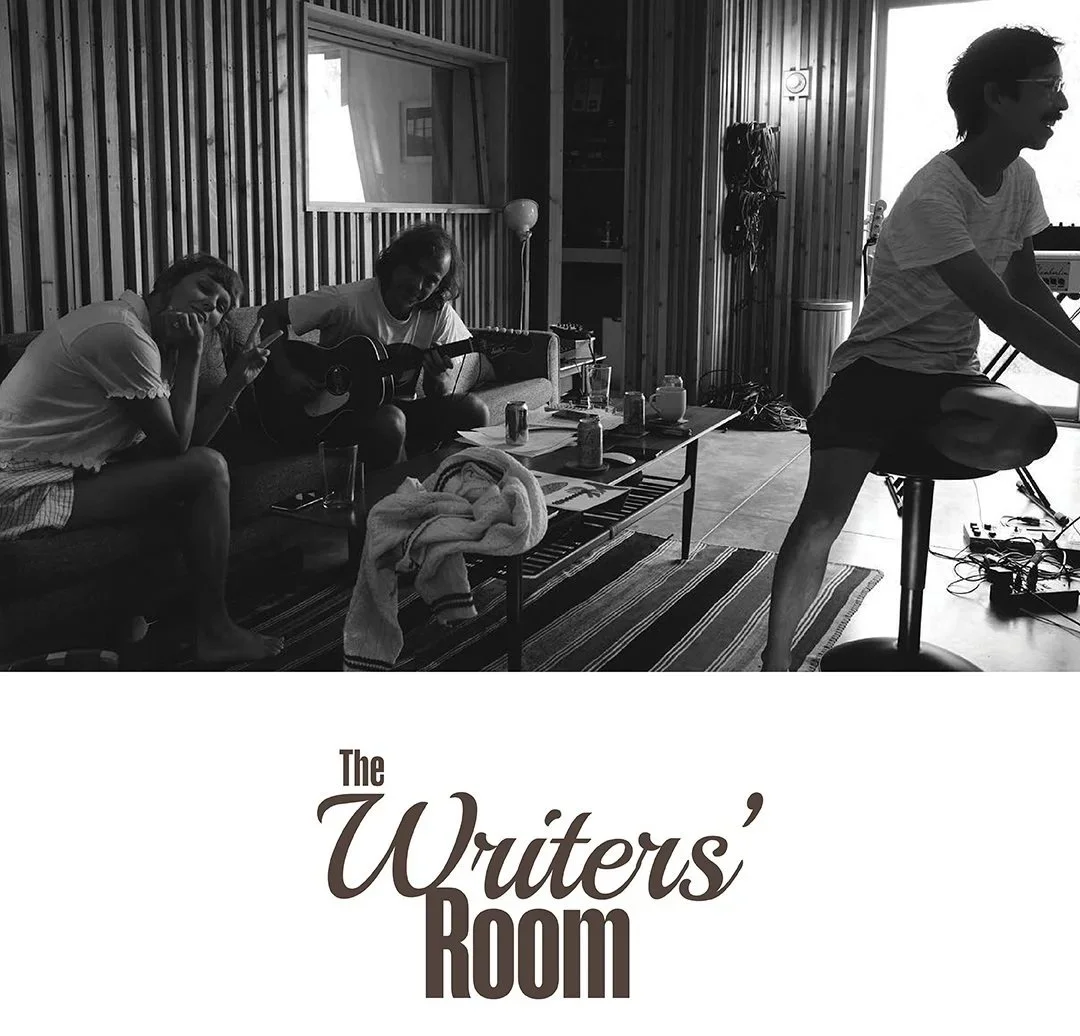
The first thing you notice in any writers’ room is the focus. No one is talking about fame. No single person is talking about how something might look. Or how something written might be received. The talk is of bridges. Of one- four-five progressions. Of chords that refuse to resolve but need to.
About whether a first person confession in the lyric hits harder than something more ‘universal’. Whether keeping in the inclusion of place names gives it specificity or, again, just sets the scene better. It is in these environments that Taylor Swift excels. These problems, confusions and conundrums are being worked out in rooms like these; the world over. Put simply, how do you make a modern pop song that behaves like a short story, but still gets screamed back by 70,000 people a night. In this, chances are that universalness is ‘not the thing’.
With regards to places like this, with work happening like this, there runs a single question: who shapes this music, and how far does its influence travel once it leaves the room. How influential is the main character. And how do these people get into this room, with this person in the first place.
Proximity placed Nashville veterans Nathan Chapman and Liz Rose on Swift’s radar, both helping write and define the sound of the early albums. Nathan Chapman is a Tennessee-based producer and musician and Swift’s primary studio partner through her first three albums.
He began his career working in country and Christian music, gradually building a reputation as a detail oriented, song first producer comfortable working with young artists. He was paired with Swift when she was still a teenager cutting demos, and went on to co produce her self titled debut Taylor Swift (2006), Fearless (2008) and Speak Now (2010), as well as contributing to Red (2012).
In interviews, Chapman has emphasised Swift’s ability in the telling of stories as being the through line of her work. According to Chapman, in the tradition of writers like Dolly Parton and Willie Nelson. His production on those records leans into acoustic guitars, banjo, fiddle and clean, radio friendly arrangements that keep the singer’s voice and lyrics at the centre. Over the course, as Swift’s inclinations towards poppier influences broadened, Chapman’s role reduced. And by Red he was sharing space with pop leaning producers such as Max Martin and Shellback. And by the release of 1989 he had only a single production credit (“This Love”).
Liz Rose came into the picture at the same time as Chapman as a collaborator and writing companion. Another American songwriter and Nashville veteran, Rose entered the world of professional songwriting later in life, developing a speciality for the same conversational, emotionally direct lyrics that fit comfortably within contemporary country and alongside Swift’s own style.
Rose and Swift began working together when Swift was still in her early teens, often meeting after school to refine lyrics Swift brought in. Rose has described her role less as supplying concepts and more as an editor and someone passing on the craft as a partner, helping a precocious young writer tighten verses, clarify narratives and sharpen hooks without sanding off what was unique.
Together they co wrote key early tracks including “Tim McGraw,” “Teardrops on My Guitar,” “White Horse” and “You Belong With Me,” songs that defined Swift’s early persona and became crossover hits.
Beyond Swift, Rose has written for artists such as Little Big Town, with whom she co wrote the Grammy winning “Girl Crush,” underlining her status as a heavyweight in Nashville songwriting circles. Her work with Swift, though, occupies a special place in both careers: for Rose, a partnership that showcased her ability to mentor and co shape a global star; for Swift, a formative collaboration that helped translate teenage journals into structurally sophisticated, radio ready songs that still felt like they belonged to the girl writing them in her bedroom.
From there, Sweden’s Max Martin and Shellback sit at the heart of Taylor Swift’s transition from country-rooted crossover star to fully fledged global popstar. They are the duo behind many of the louder corners of her pop catalogue – the moments where the songs stop nodding towards Nashville and started speaking fluent Top 40.
Swift first works with Max Martin and Johan “Shellback” Schuster on Red, bringing them in specifically to push forward the most pop leaning material. Together they co write and co produce tracks including “We Are Never Ever Getting Back Together,” “I Knew You Were Trouble” and “22,” which become some of the album’s biggest singles and mark a clear sonic departure from her earlier, more traditional country production.
The trio built what would become the pop template on 1989 (2014), Swift committing to the sound of 1980s inflected pop on tracks that included uber-hits “Shake It Off,” “Blank Space,” “Style,” “Bad Blood” and “Wildest Dreams.” The trio’s work together is defined by the crack of drums, chant like hooks and layered synths that frame her voice. They darkened the palette further with Reputation (2017).
Across these albums, Swift has said working with Martin, “taught her more about writing than anyone she can imagine ever meeting”. They would reunite on 2025’s The Life of a Showgirl, Swift describing it as the first time they have made an album where it is “just the three of us” and “no other collaborators,” positioning the record as a focused reunion around her global touring schedule.
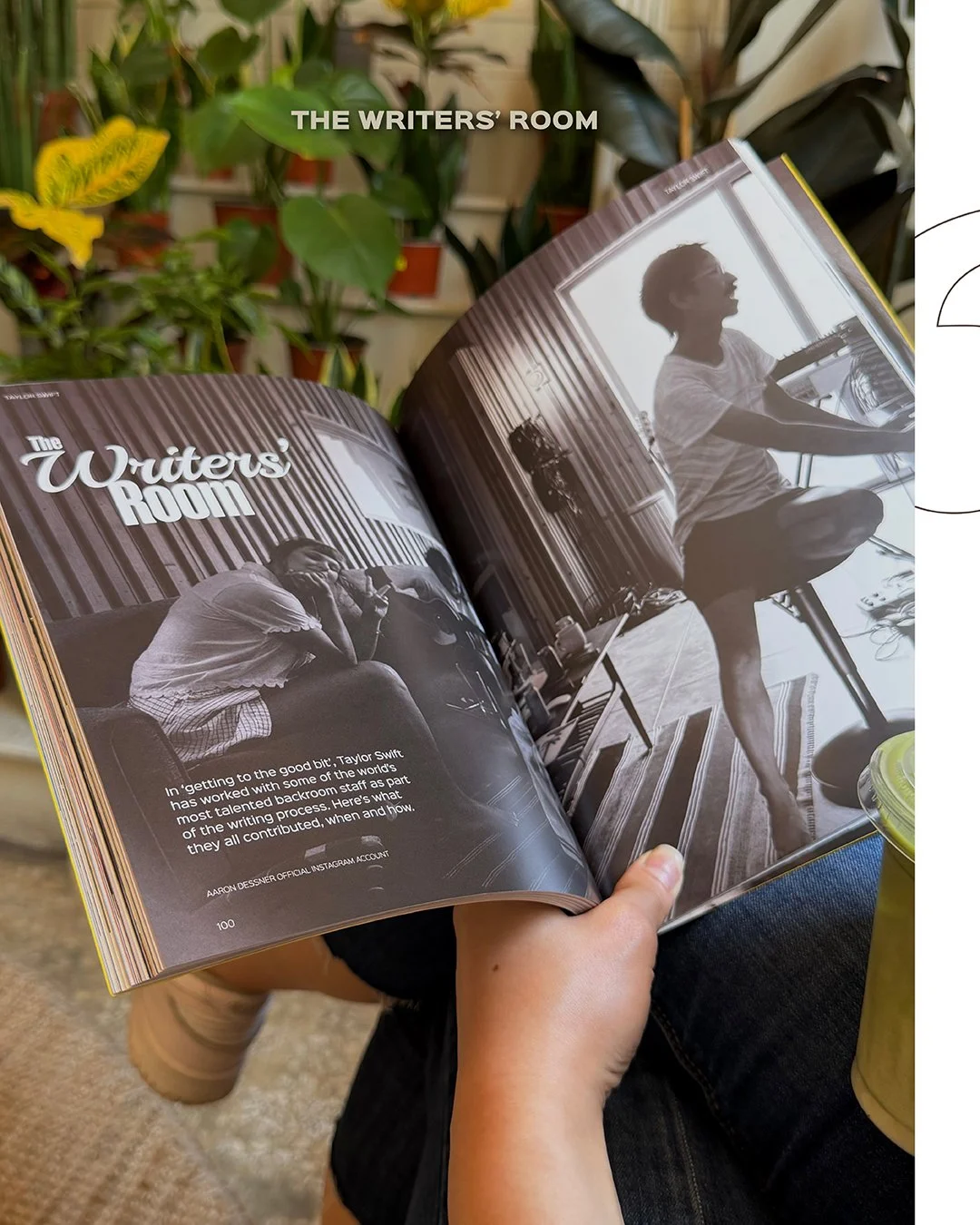
Ryan Tedder’s relationship with Taylor Swift begins around the 1989 era, when she was actively seeking collaborators to help execute that full, unapologetic pivot into pop. Swift reached out to Tedder after admiring his track record as a writer producer behind huge, melodically rich hits for artists like Leona Lewis, Beyoncé and Adele, seeing in him someone who could balance radio scale with emotional detail.
Accounts of the sessions describe Swift initiating contact and coming in highly prepared, sometimes sending over ideas, melodies or lyrics in advance so the studio time could move quickly – an approach Tedder has praised in interviews as unusually focused and intense. He has characterised her as the sort of collaborator who is texting structures, lines and concepts before the day even starts, which he contrasted with more relaxed, improvisational writing environments he has experienced with others.
The first proof of this relationship were “Welcome to New York” and “I Know Places” on 1989, both co written and co produced by Tedder and released in 2014. Those tracks mark the point at which their collaboration became public record.
It is Tedder’s résumé with Taylor Swift that forms a notable part of Swift’s story, contributing his stadium scale, hook driven pop sensibility to 1989, a record that went on to win the Grammy for Album of the Year and cement her mainstream crossover. In later interviews he has praised Swift as “pound for pound the most talented writer” he has worked with and suggested that, even without her success as an artist, she could have been one of the world’s top songwriters on the strength of her craft alone.
Jack Antonoff ’s name appears again and again across the Swift canon of work. Over the last decade he has become at the least an influence and at its most extreme a co author: as the go-to producer writer whose fingerprints are all over Taylor Swift’s most widescreen pop records. Time magazine traces the partnership from an early one off soundtrack cut through the high gloss world of 1989 and Reputation to the pastel shades of Lover and folklore, his hand guiding Swift’s naturally diaristic writing and placing it in the context of synths and drum machines.
Antonoff’s parallel work with Lorde, Lana Del Rey and St. Vincent compares favourably with his work with Swift. On albums like Del Rey’s Norman Fucking Rockwell, particularly, they map – not just reference – shared sounds and shared structure and tactics. Everything from long, narrative bridges that introduce a B-road to the story being told, messing with a song’s initial premise. Or in the addition of a hyper specific location drop that feels like something that might appear in the margin of a novel – or within the epilogue – rather that a radio hook. Antonoff enters the writers’ room with a drum loop and a synth line, from which to make ‘the song’.
Whereas, Aaron Dessner’s influence is more analogue, sonically. And abstract. His being all muted guitars, upright pianos and arpeggiated chord shapes. The surprise of pandemic releases, folklore and evermore, wasn’t in the headline of the time that “Taylor goes indie”, but in it signposting a change in process altogether. Of textures and moods, created by sketches and atmospheres. A definite shift from Antonoff.
In interviews, Dessner reported that he was ‘stunned’ by the speed and detail of the songs that came back to him when working remotely. He has described himself as “flabbergasted” by Swift’s ability to take a bare piano figure and return, sometimes within hours, a fully realised narrative, populated with characters, timelines and subtle shifts in perspective.
When Time magazine lays out Swift’s key collaborators, Dessner sits there as the genius of a parallel universe in her discography: a world of low lights, lo-fi, unfinished edges and songs that sound like short stories set against a mood rather than music. Turning her from confessional diarist to short fiction writer. One alive to ambiguity, the power of negative space and the strength held in the unsaid.
Never measured by the company Swift keeps, Rolling Stone – long-since a barometer of rock prestige – has now devoted many cover stories, list features and long form reviews to her and her art. Where previously that wasn’t the case. It signals that a mainstream music monthly is willing to place – particularly her new release – in the thick of their coverage, where it once would have placed a legacy rock act or a cult singer songwriter. They say that songwriting is a long and winding road. It may not all start in the writing room, but it’s often where the magic happens.
Pick up a copy of Taylor Swift, Eras, Evolution & Easter Eggs.