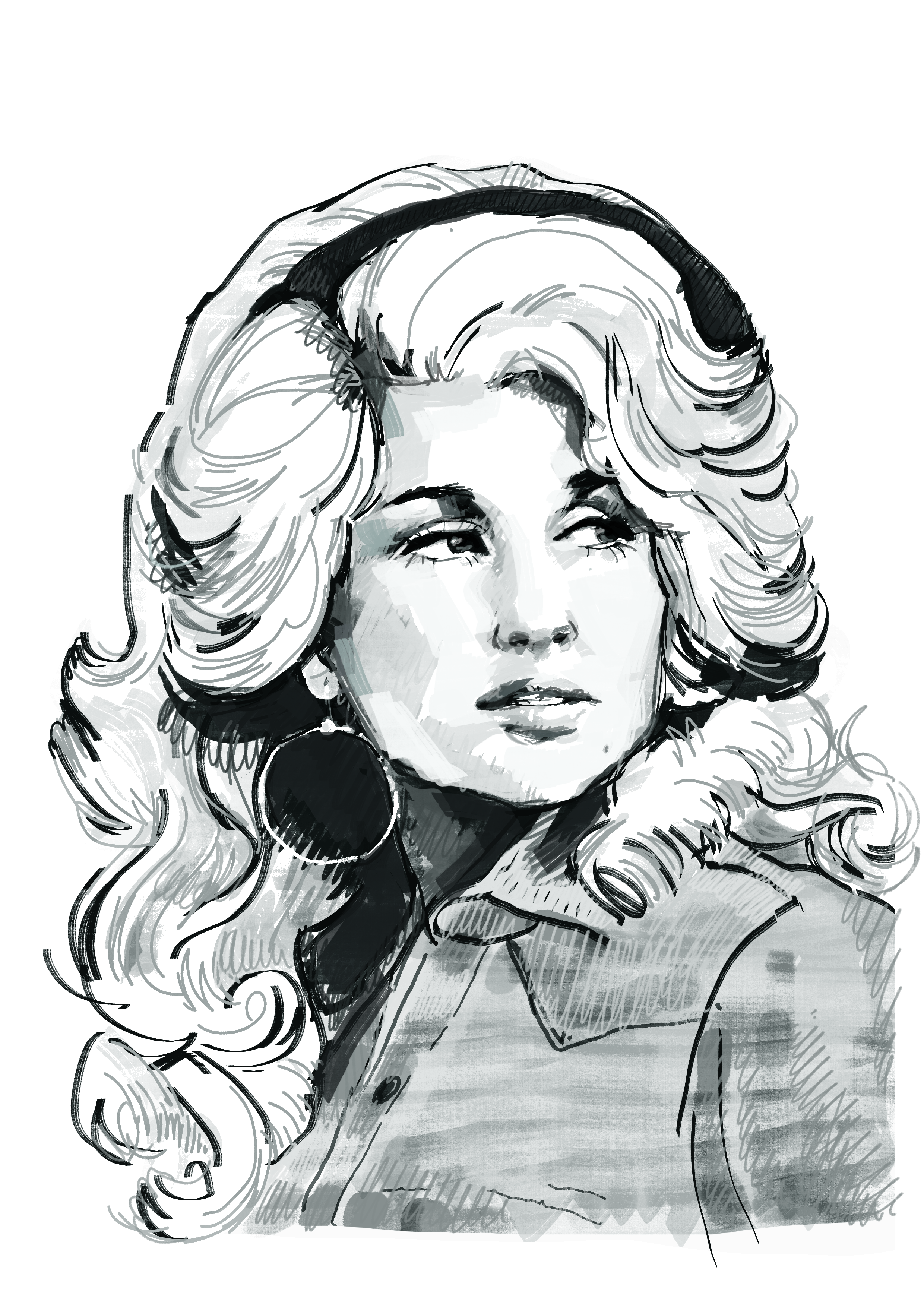
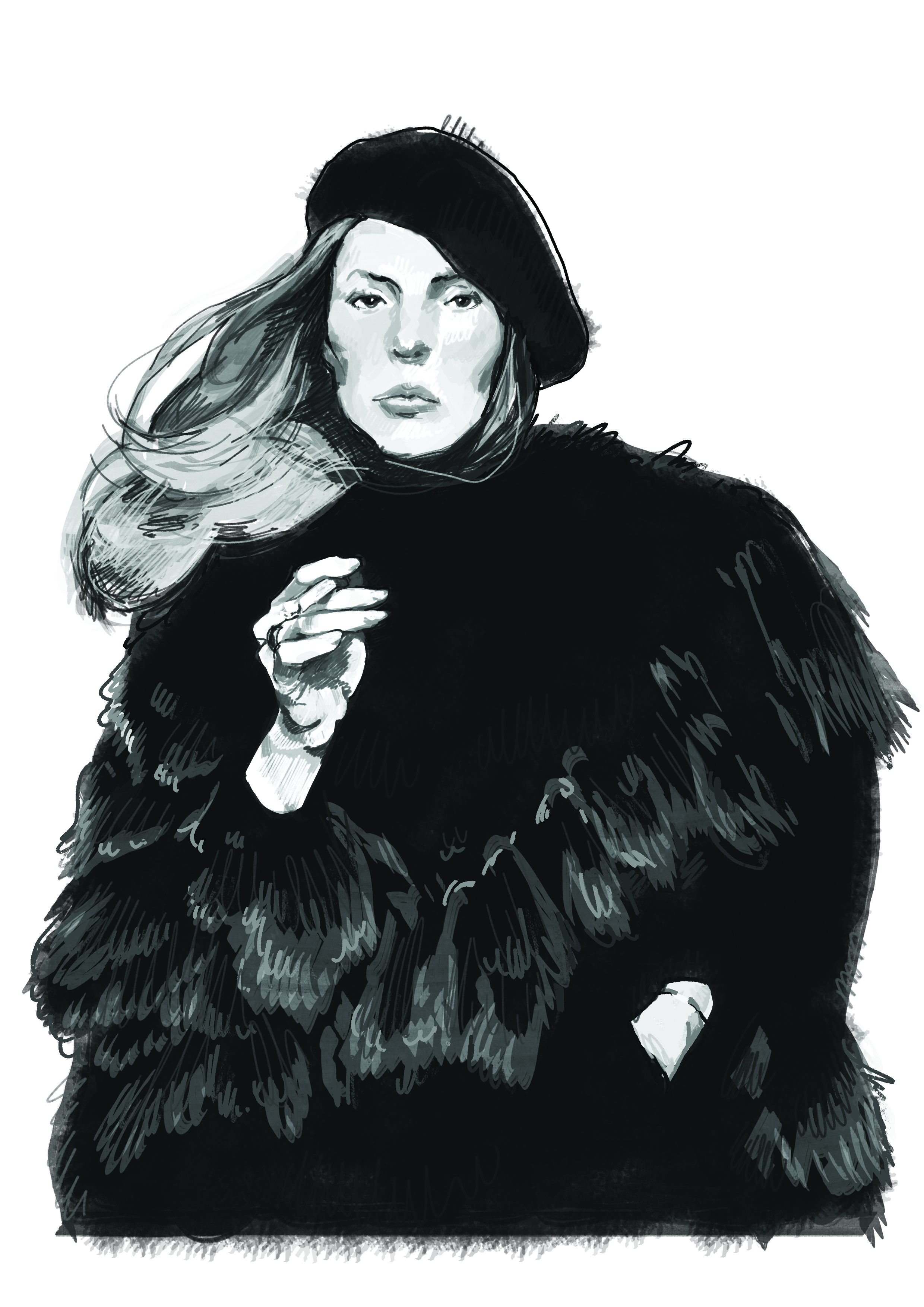
Born in Alberta, Canada, in 1943, Joni Mitchell’s work blends introspection and a natural, narrative-style, of poetry, delivered in the classic North American singer-songwriter style. A striking voice, presence, and image – album after album – she’s proven a cultural hill on which fans are happy to die and an inspiration for generations of female musicians to follow in her wake.
Mitchell began as a busker before being signed to Reprise Records from her earliest recordings, where she distinguished herself not just as a singer but as something of an auteur and musical outlier. She played guitar in more unique tunings and voicings, wrote with a rawness, and went as far as insisting on co-producing her records, which was not the norm for musicians of that era, and almost unheard of for women in the mid-1960s and early ’70s.
She gave birth to a daughter, born Kelly Dale Anderson in 1965. At the time, Mitchell was a 21-year-old struggling art student in Toronto. Unable to provide for her child, she placed her for adoption, and would later describe feeling as though she had no option, with “no money for diapers, or a room to take her to.” As a single mother in the conservative climate of the 1960s, times were very different.
The truth about Mitchell’s decision – and her daughter’s identity – only became public in the 1990s after a former acquaintance sold the story to a tabloid. Their paths eventually crossed again in 1997, when Kilauren Gibb, by then a fashion model and mother herself, sought out her birth mother.
Music-wise, second album, Clouds (1969), won Mitchell her first Grammy Award, laying groundwork for a career in music. Ladies of the Canyon (1970) became an instant FM radio hit, and Mitchell’s first gold album, selling over half a million copies and cementing her spot in the world of folk-rock.
It would be Blue (1971) – described as one of the most influential albums in modern music history – that would set her apart. The record included the song “Little Green,” written about her daughter, it served to break cover on the musician’s past, and new ground on what might be expected of the tradition of singer-songwriter. With the record namechecked across time, by artists from Bob Dylan to Prince. It inspired direct generational successors in the likes of Suzanne Vega, Tracey Chapman and Alanis Morissette.
Following Blue, Mitchell continued her evolution. For the Roses (1972) incorporated orchestral arrangements and yielded her first hit single, “You Turn Me On, I’m a Radio.” But it was Court and Spark (1974) that fully bridged musical genres, hitting No. 2 on the Billboard charts, earning four Grammy nominations, and producing Mitchell’s only Top 10 single stateside, “Help Me”.
Mitchell’s increased incorporation of jazz and experimental sounds in the late 1970s alienated elements of her folk and pop audience. In albums Don Juan’s Reckless Daughter (1977 double album) and Mingus (1979) – conceived and realised alongside legendary jazzer Charles Mingus – though revered today, received mixed reviews and low sales upon release. Especially compared to her earlier work.
Away from the road and studio, Mitchell also endured personal trials, health challenges and critical backlash. Remaining defiantly independent of thought throughout. It is felt that Mitchell’s romantic and creative relationships shaped both her life and music. Her first marriage, to folk singer Chuck Mitchell, was brief and tumultuous; they married in Toronto and performed together before separating after a year and a half. Afterwards, Mitchell’s love life was somewhat typical of the spirit of ‘that time’. Where she became entwined with what might be described as California’s ‘countercultural elite’ of the 1960s and ’70s. Graham Nash and David Crosby (from Crosby, Stills, Nash (& Young)) were for periods both lovers and collaborators as part of LA’s Laurel Canyon musical hub. She also developed deep friendships and creative bonds with figures such as Stephen Stills, Cass Elliot, Jackson Browne, and later Herbie Hancock, Paul McCartney, and Elton John. Her second marriage to producer Larry Klein lasted a decade but ended in the 1990s.
From her upbringing in Canada she migrated through New York, Detroit, and LA. When fame overwhelmed her in the 1970s, she retreated to a hippie commune in Crete, before returning to the restorative quiet of Canada’s seaside. Her longtime home has been, for decades now, a hilltop mansion in Bel Air, Los Angeles. Although described as semi-reclusive – largely due to her health – she is also thought to still spend some time on the Sunshine Coast in British Columbia, Canada.
She is a lifelong painter, often alternating painting periods with songwriting, describing it as a form of ‘crop rotation for her soul’. She has battled serious health issues, including polio as a child and a more recent battle with a rare illness affecting her mobility.
Her music catalogue now spans over 20 albums. Earning the star nine Grammy Awards including a win for Turbulent Indigo in 1995. Still as relevant as ever, in 2021 she struck a global administration deal with Reservoir Media, which allows the company to manage publishing worldwide on her behalf.
A Polar Music Prize winner, and a Lifetime Achievement Award from the National Academy of Songwriters, Mitchell was also inducted into the Rock and Roll Hall of Fame on May 6, 1997. In the star’s absence, Shawn Colvin delivered the induction speech, and the award itself was accepted on Mitchell's behalf by the aforementioned Graham Nash.
Brandi Carlile, Lana Del Rey, Laura Marling, Norah Jones, Sara Bareilles, and members of the band, Haim, have all repeatedly acknowledged how Joni Mitchell’s craft and stylistic progression inspired their own approach to songwriting. Throw in Fiona Apple, St. Vincent (Annie Clark), Phoebe Bridgers, Sharon Van Etten, Julia Jacklin, Lianne La Havas, and Björk and Mitchell’s confessional writing, melodic inventiveness, and ability to blend genres still resonates strongly with generations of women in contemporary music. With Taylor Swift publicly praising Mitchell’s songwriting as inspiration for her albums Red and folklore.
Kate Bush