

For The Record…
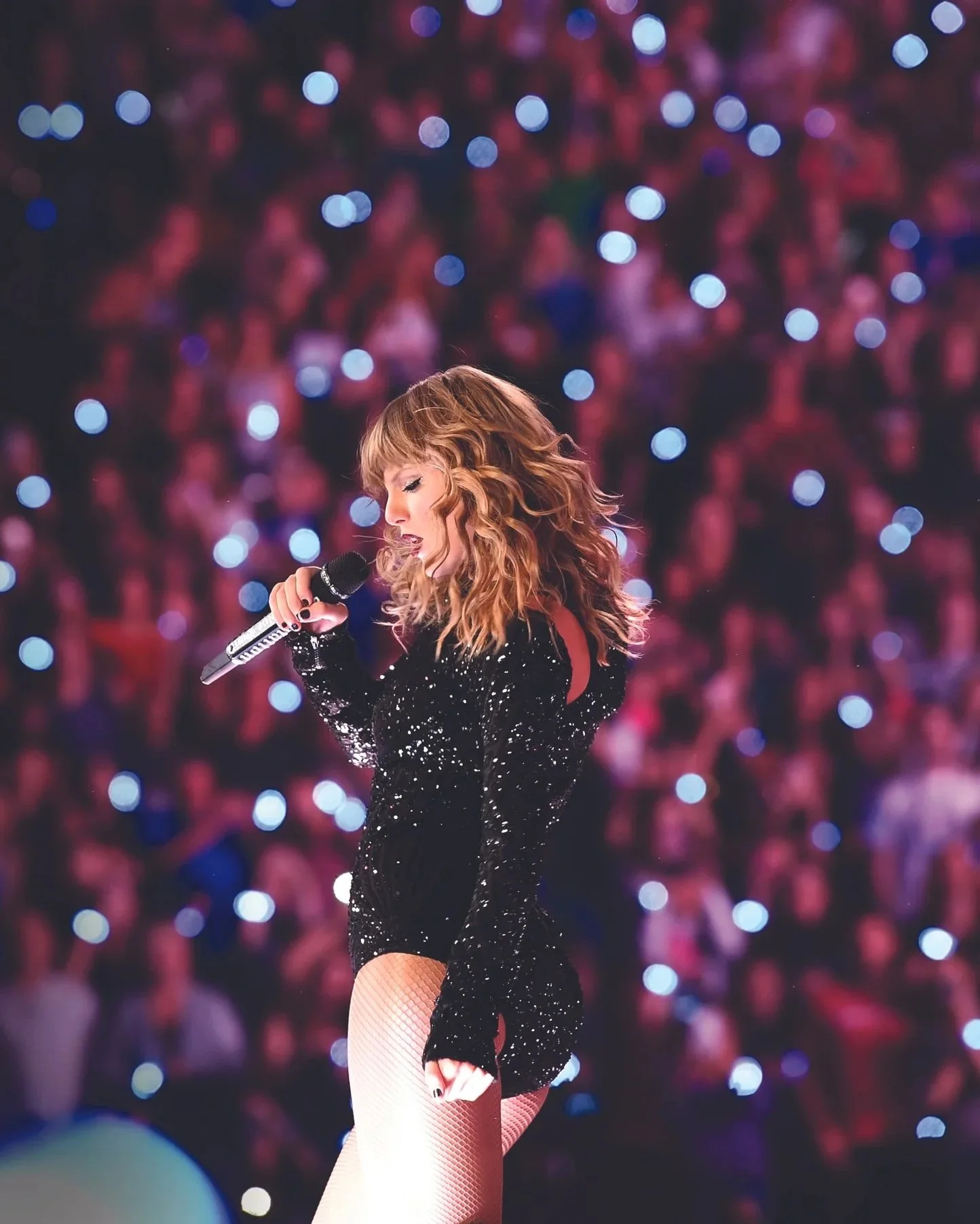
From breakup songs to diss tracks; pop-country to dubstep; 10-minute masterpieces to three minutes of pure bubblegum; here’s the Taylor Swift album discography put under the Pitch ratings microscope. Objective version.
Taylor Swift (2006)
The self-titled debut album that provided the key turn and ignition spark for a long-and-lasting journey into storytelling. In this instance, it’s of the teenage variety. And it all started in and with Nashville.
Tennessee landed her, as a persona, within the musical landscape as that picture-perfect country girl whose, to quote Billboard magazine, “vulnerability sets her apart from the rest”. And released when aged just 16, the artist managed to join together many facets of high-school melodrama via her country-leaning vocal overtones and lyrical sensitivities. The record made teen anthems of “Teardrops on My Guitar” and “Our Song”. And that’s without the prominence of monster hit and debut single, “Tim McGraw”.
At the time, critics somewhat lazily called it “immature, yet packed with promise”, but how could it not be? And Billboard again praised the writer’s “ability to capture specific emotions in a relatable way”. A point that has proved true throughout her career.
In her songcraft and that aforementioned relatability, Swift singlehandedly managed to add a new audience to country’s fanbase, at that time. Making her teased-and-tousled hair and cowboy boots iconic. To the point of it developing into bachelorette and hen party standard dress code.
Nominated for Album of the Year at the Country Music Awards, it spent 24 weeks atop the country streaming charts. In its wake a new community started forming around a songwriter who would go on to write her life into her work on their behalf. In many ways, nothing has changed. Save for the scale and the ambition. And the friendship bands.
Sonically, it’s pure mid-noughties country. With fiddles, pedal steels and banjos supporting the lyrical narrative. In its musical arrangements, it’s everything you’d expect of that time in Nashville. What sets it apart is the fact that Swift appears as either the sole writer or co-writer on every track. Primarily supported by Nashville songwriting legend Liz Rose, which was unheard of for a new artist. Then or now.
Every artist starts someone. Few start with such an undeniable sense of self.
Editor’s Rating: 3 (out of 5)
Fearless (2008)
“Unrealistic romanticism and the dramatics of young love,” said Billboard. Its soft-focus core aside, the sophomore album triggered a set of circumstances that can only be described as gassing up a commercial juggernaut. Writing mega hits rarely relies on anything other than everyman appeal and Fearless has this at its heart.
Fearless spent 11 non-consecutive weeks atop the Billboard 200 and won Album of the Year at the Grammys, making Swift its youngest ever recipient.
The behemoth that is “Love Story”, and the country radio ever-present “You Belong With Me” sold a collective 7.3 million copies as singles in the USA alone, recharting pop-country’s direction. It proved the antithesis to the prevalent Bro Country sound of the day, Swift’s sensitivities and lyrical vulnerability were at odds with likes of Jason Aldean, Luke Bryan and Florida Georgia Line, and their songs of back roads, girls in Daisy Duke shorts and partying and pickup trucks.
Critics picked up on the more confessional nature of the lyrics and the hookiness of the melodies. Rolling Stone prophetically called her “a crossover phenomenon building new bridges between genres”.
Again, written by Swift with primary co-writes courtesy of Liz Rose, the pair were supported by Nashville trio Hillary Lindsey, Colbie Caillat and John Rich. An advance on the previous effort saw the artist in the co-production chair.
The album’s cultural legacy lies in the landscape it created lyrically and is further brought to life through its more mainstream pop melodies. Those tales being regaled of high school bleachers, jocks and nerds, and of smalltown starts powering big city dreams. Fearless remains the only album from the 2000s to spend its first full year in the Billboard top 10, and by 2025, it’s at 11x platinum seller. A touchstone for modern pop music.
Rating: 4.5
Speak Now (2010)
Speak Now was Swift’s coming-of-age, written entirely by her own hand as “a reaction to critics’ doubts about her songwriting,” as Rolling Stone observed.
It delivered confessions, confrontations, and a layer of maturity on tracks like “Back to December” and “Dear John.” Reviewers termed it “confessional and confrontational,” with critics admiring the “raw intensity” and the scale of the writer’s ambition. Pitchfork declared Swift “a pop star now more than a Nashville prodigy,” as she challenged narratives around female creativity and autonomy. She was not yet 20 and free of co-writers.
The cultural impact saw not only Swift’s transition out of adolescence and unafraid to address fame’s costs and relationships in the public eye, it was also a commercial bellwether. Selling a million copies in its first week of release. All despite the industry’s general downturn. It marked Swift’s territory and her generational hold on her audience. It was then and is now an album inseparable from her rise as a musician and songwriter.
Rating: 4
Red (2012)
A genre-hopping odyssey. In explosive single “We Are Never Ever Getting Back Together” and the resigned-yet-triumphant “All Too Well”, the album possesses the sharpest of cornerstones. Critics praised what was described as a “16-song geyser of willful eclecticism” (Jon Dolan) and “the finest fantasy pop has ever constructed” (The Guardian).
Swift’s confessional songwriting matured, yielding “tattoo-worthy” lyricism and what would prove to be a signature heartbreak narrative for the next decade.
Debuting with over 1.2 million sold in week one, Red dragged it out to seven weeks atop the Billboard 200, earning 8x platinum US certification. Its legacy is both creative and cultural: embracing EDM, arena rock, and still a hit at the artist’s country roots, it set the stage for Swift’s pop reinvention – or was it always there?
Lyrically, the album was said to inspire “a generation to write about their feelings – unapologetically”. In 2021, Red (Taylor’s Version) reasserted what has proven to be its enduring power, with vault tracks emerging that included the epic “All Too Well (10 Minute Version)”. Undeniable as one of the artist’s finest moments, its confidence – five verses – musical ambition, lyrical dexterity and complex narrative arc (negging on actor and former boyfriend Jake Gyllenhaal) it showcases everything possible in a pop music context. From the depth of feelings displayed, the use of vocal tone to control the song’s musical dynamics, and sheer ability to understand and convey several emotions within the same song. All present whilst touching on the power dynamic of age-gap relationships, the complexity of perspectives in shared memories, and the ambiguity of modern life. In its mastery this is Swift’s magnum opus.
Rating: 4.5
1989 (2014)
Her full pop metamorphosis. In this, 1989 was described upon release as the star’s “pure pop masterpiece” (Pitchfork), blending synth pad-powered electronica and lyrical sharpness. Swift – and Swedish producers like Max Martin – crafted what were at the time and remain instant classics. That included “Shake It Off,” “Blank Space,” and the Harry Styles-inspired… “Style.”
The critics took to her reinvention, describing it as “fearless, forward-thinking pop that rewards repeat listens” (Rolling Stone). It became the apex of her fame at that time, 1989 earned Swift her second Album of the Year Grammy, sold over 10 million global copies, and spent a record 11 weeks at No.1 in the USA.
The era saw a now well-and-truly redefined Swift. Replacing any last vestiges of that country cowgirl with an 80s-inspired sound, repurposed. A statement of intent that has been the star’s calling card ever since.
Rating: 4
Reputation (2017)
A thunderous rebuke to the star feeling alienated within her business dealings, made rawer still by the failings of that time’s personal and professional relationships, the only path forward appeared to be a further revised reinvention. Harder edged. More urban. Tougher and less obtuse. It’s full of shadowy synths, hip-hop beats, and a more defiant set of, at times, hard done to lyrics. “There will be no explanation, there will just be reputation,” she wrote at the record’s release. And the album delivered, charting six singles and once again selling 1.2 million in its first week of release.
With biting tracks like “Look What You Made Me Do,” (Kanye West, Katy Perry and Kim Kardashian all in the firing line), she turned the day’s feuds into jet fuel. NME called it “her most blistering, complex album to date,” while The Guardian admired what they proffered as her “uncompromising vision.”
Culturally, Reputation shaped what the 2010s became in terms of a famous person’s engagement with fame. Filled with internet drama, and gaslighting. The Red tour shattered records, and Swift’s willingness to take creative risk expanded her sound and audience yet again. Leaving few behind.
At its core, Reputation proved Swift – if she needed to – could weaponise and reshape her ‘truth’. As an artist, it’s an incredibly powerful flex.
Rating: 4
Lover (2019)
And again we move. This time a shift to pastel pop. Practicing ‘radical vulnerability’, Lover was hailed by The Independent as Swift’s “most emotionally raw” album.
Bustling with “The Archer,” “You Need to Calm Down,” and “Miss Americana & The Heartbreak Prince,” Lover celebrated romance and championed self-love and focusing on wellbeing.
It swept streaming records – three million downloads in the opening week worldwide – and Rolling Stone called it “a career-spanning reconciliation, tying up narrative threads.”
Culturally, it was Swift’s first fully-artist-controlled release, emblematic of her evolving business autonomy. The style shift emphasised the star’s ability to do anything and try anything. It was to many the first awakening of the era’s themes on inclusivity, community and tolerance. While “Lover” and “The Man” garnered Grammy nods. The whole package – Swift, her autonomy and authority of ownership – sparked cultural conversations about gender and power.
Rating: 4
Folklore (2020)
Cue the pandemic. And the surprise that was Folklore. Described as what looked to be an atmospheric detour, Pitchfork called it “a triumph of subtle storytelling”, featuring collaborations with Aaron Dessner and Bon Iver.
Viewed and listened to in isolation, the album’s definitively indie-folk textures and fictional arcs (“Cardigan,” “Exile,” “The Last Great American Dynasty”) struck critics as “her most mature and affecting work yet.” The New York Times called it “a home-recorded masterpiece.” Her ‘Nebraska record’ debuted at No.1, breaking streaming records and it earned Swift a historic third Album of the Year Grammy.
Folklore’s impact was seismic for the star. Singularly and simply softening mainstream expectations. In its release, it was at the vanguard for acoustic pop that appeared during quarantine. A time that spawned a million bedroom cover versions from the famous and the as yet unknown. It’s appeal cemented Swift’s prowess as a chronicler of collective and private heartbreaks. This time, in a different shade of musical skin.
Rating: 4
Evermore (2020)
Evermore, the “folklorian sister record,” extended what has been characterised as Swift’s emo-folk detour. Featuring input from bands The National and Haim, its songs – “willow,” “champagne problems,” “no body, no crime” – all drew attention for their ever-intricate narratives. With Variety describing it as “a master class in songwriting.”
Dropping only months after Folklore, it stunned the industry and reached No.1 in the US and UK. Critics lauded her “constellation of stories,” while its blend of folk, rock, and tales of betrayal showcased enduring literary ambition. Commercially satisfactory, Evermore deepened Swift’s relationship with the indie world and confirmed her as a disciple of her formative years, and an unparalleled storyteller, cementing the two-album COVID run as a B-road on people’s lives and also in 21st-century pop.
Rating: 3.5
Midnights (2022)
A journal of sleepless nights, Midnights marked Swift’s return to self-penned pop, once again blending synths, dreamlike textures, and late-night confessionals.
Rolling Stone lauded its “elegant, lo-fi production,” and Billboard called it a “pop treasure trove.” Highlights like “Anti-Hero,” “Bejeweled,” and “Lavender Haze” became anthems as Swift set streaming records – Midnights logged the biggest Spotify single-day album numbers in history upon its release.
The album’s honest, again diaristic lyrics connected cross-generationally, spurred TikTok trends and any number of think pieces. Musically, Midnights referenced and then melded past eras into glossier new forms, casting Swift as both a historian, curator and innovator of modern music.
Rating: 4
The Life of a Showgirl (2025)
Taylor Swift’s twelfth studio album, The Life of a Showgirl, is an autobiographical masterwork. It’s part dazzling spectacle and part raw elegy that dives into fame’s dual edge but is grounded in a new-found personal relationship the star clearly believes in. Critics hailed it as “an allegory about the perils of fame and the cost of glamour” and praised Swift’s storytelling paired with Sabrina Carpenter’s unifying duet vocals.
Standout tracks like “The Fate of Ophelia” and “Elizabeth Taylor” earned acclaim for their narrative ambition, while “Wish List” and “Honey” revealed Swift’s yearning for ordinary joys and intimate love, referencing her relationship with NFL ‘baller’, Travis Kelce. Commercially, it shattered records: No. 1 on the Billboard 200, all 12 tracks trending on the Hot 100, and viral lyric breakdowns dominating social media. Musically, Swift fused glittery pop with introspective balladry – the sequins and scars working to offset each other. The art of turning vulnerability into power, and the spectacle into healing.
Rating: 4