

One More Time
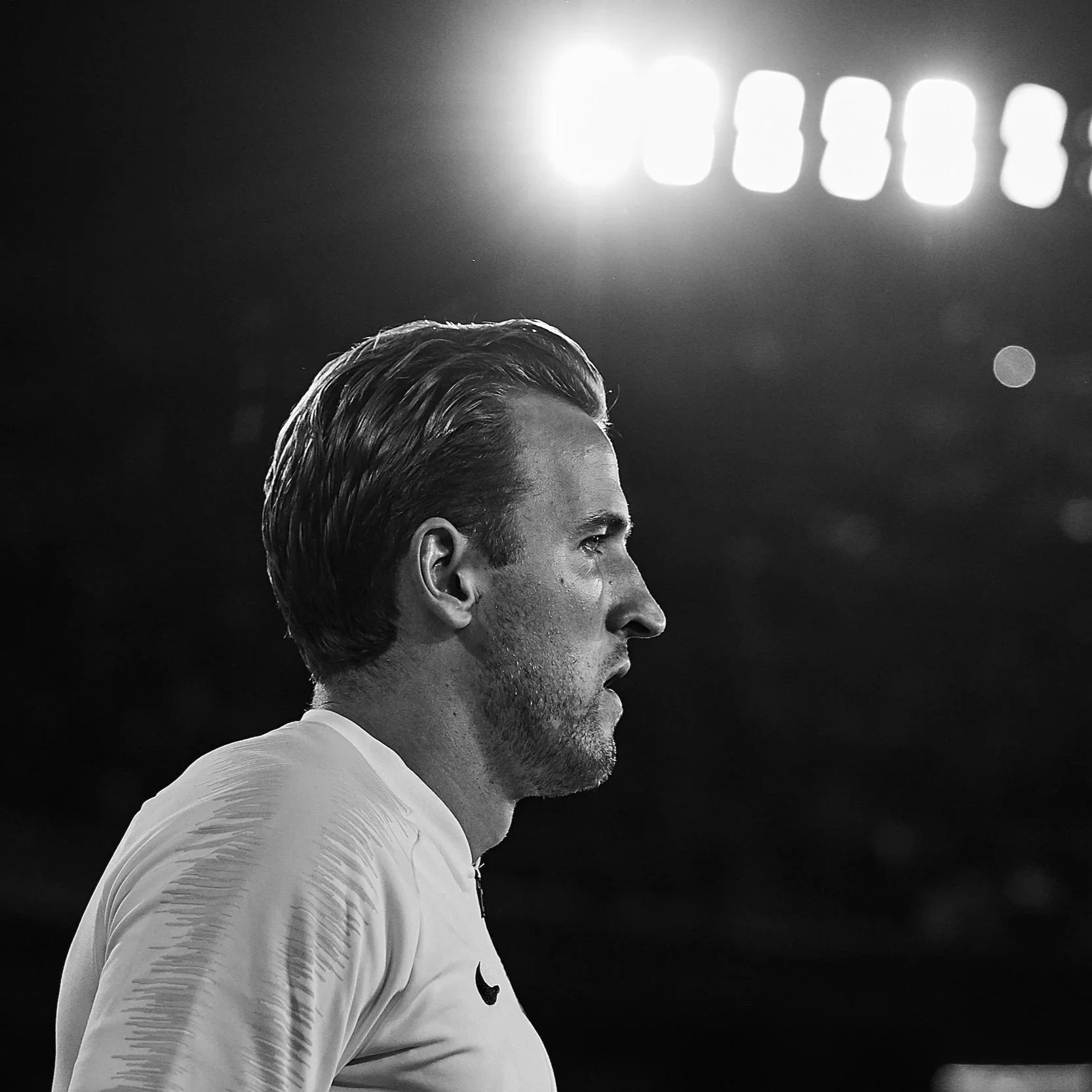
Andy Afford looks at the World Cup through the prism of squad ages. Is it really just a number, or is there something more to growing up? England will definitely hope so.
The Three Lions have spent football’s modern era trying to solve a very specific problem. How best to square off why there remains an expectation that the national team will not only qualify for but win each subsequent edition of the World Cup? Something the country hasn’t done for 60 years.
This mindset is now based on little more than nostalgia, mixed with a healthy degree of Little England nationalism, glued together by an ‘It’s Coming Home’ arrogance about the genesis of the sport. Est’d 1966, etc. And very little else, you’d have to say.
Arguably, linked closest to the team’s chances, the most important numbers aren’t the price of a replica shirt (£134.99), who wears the No.10, how many England fans will be travelling (north of 10,000), or whether Thomas Tuchel will set his team up as a 3-5-1-1 or a 4-4-2, but more about time spent on Earth itself. And how that figure directly influences the average age of the squad.
“The best performing sides are usually not the most dazzling on paper but the ones best equipped to survive the tournament’s specific laws of attrition”
Since 1970 – a time when the visual identity of the national team has changed every bit as much as the composition of squads since – the challenge has remained stubbornly similar. That is, how does England, or any nation for that matter, build a side mature enough to withstand the tournament’s emotional load, but young enough to keep moving forward with the urgency that modern knockout football demands?
England’s perceived recent failures have ironically often been useful, precisely because it has kept the team in that awkward middle zone of performance. They have been close enough to contention – and always one of the bookmakers’ sentimental favourites – but still young enough to learn from disappointment. But never so old, and so in love with the players, that the cycle has become sentimental. Or performance so disastrous that good young players face ejection as inadvertent collateral damage.
In fact, slightly lowered expectations under the team’s early tenure of Gareth Southgate, did everyone a favour. Especially its run to a fourth-place finish at the 2018 Russia World Cup. In this instance, a young England side unilaterally outperformed expectations. Even winning a penalty shootout along the way. That gaining of experience – in all its forms – matters, because the World Cup is rarely won by a team at either extreme of the ‘young vs old’ continuum.
The historical pattern regarding age profile is consistent enough to be more than coincidence. Studies of World Cups from 1998 to 2018 found tournament players averaging around 26 years old, with winners averaging 25.4 and finalists 26.9. In other words, the trophy is usually lifted by teams with enough experience to know their way around the competition, but with plenty freshness to sustain keeping the dream alive.
England have lived in that middle performance band for some time without always mastering what it means or what they’ve learnt. In Russia in 2018, they were one of the younger squads in the field at 26.0 years on average. In Qatar, four years later, they were only slightly older at 26.4. Those are not especially dramatic numbers, but they sit right in the historical sweet spot, which is part of what makes perception around England’s recurring underachievement so revealing. Defying the fact that they have often had the exact age profile of a contender, without quite having the tournament identity or experience of an actual winner.
The hidden point here is that age is not just a number on a squad list. It is a proxy for how much football a team has already lived through to get them where they are. At a World Cup, that accumulated experience can be worth far more than a handful of extra metres of sprint speed, or recovery runs afforded to the young and green.
That’s because the tournament compresses any amount of stress into the best part of a month (traditionally speaking), compounded further by very little room for correction if things go wrong. Every match is loaded with expectations and implications. Every mistake is magnified, every recovery window is progressively shorter against accumulated niggles and squad depletion, and every emotional swing is best felt by those involved.
The difference between a nil-nil draw played out against a side the fans feel the team should beat hands-down, and a one-nil win over the same calibre of opposition is enough to scramble any brain; either upwards or downwards. A squad can be full of gifted younger players and still lack the one quality the World Cup quietly demands most. The ability to keep functioning at a decent level when the games stop being enjoyable in and of themselves. To perform well enough to get the right resultis the unchanging and unrelenting tournament maxim.
England’s 2022 team was not young in a naïve sense, but it was young in the way elite teams sometimes are when the key players have not yet reached the age at which fans feel comfortable with what they are likely to see from them. Jude Bellingham was 19, Bukayo Saka 21, and Phil Foden 22.
That trio symbolised a side built around movement, learning, and possibility. That’s despite Gareth Southgate’s team sitting almost exactly where historical analysis says successful squads tend to sit, age-wise. But it still felt longer on promise than probability. Despite what the stats told us. They were contenders, but still incomplete, which is often the difference between a good World Cup side and a great one. Effectively, we are talking about a winning one.
Where a squad averages an age of 26 rather than 25 it means that – in practical terms – there is more than a decade of earned football experience conceded to the older group, cumulatively. And for every subsequent year bracket up or down. This has a huge impact when things get tight; it reflects, as it does, a lot of ‘matches played’ and game management earned across a relatively short career. And at the ages under discussion, it serves as experience gained with no downside physically.
That is also why the tournament is suspicious of and unforgiving towards rawer talent and the likely effectiveness of more youthful vigour. A young team may be technically excellent and tactically fluent, but the World Cup punishes inexperience in very particular ways. Simply, it is not a development environment. It is an absolute pressure cooker. Exacerbated further by isolation between games. And media scrutiny everywhere.
The best performing sides are usually not the most dazzling on paper but the ones best equipped to survive the tournament’s specific laws of attrition. The pause between group games, the noise around one bad spell, the mental and physical drag on the mind and body of travel, the emotional burden of knowing that one mistake can end this particular cycle. And the pressure that failure might be attributed to you, and you alone, should circumstances eventuate. You could, feasibly, end up with a paper bag on your head in a Pizza Hut advert. And no-one wants that.
By contrast, the most successful older players at World Cups tend to make the tournament feel larger and more manageable, rather than smaller and impenetrable. It is, after all, an event that their presence is adding to rather than being diminished by.
By numbers, Essam El Hadary remains the oldest player in World Cup history, appearing for Egypt in 2018 at 45 years and 161 days. Faryd Mondragón, Roger Milla, Pat Jennings, Peter Shilton and Dino Zoff all belong in the same conversation, not because they were novelties but because they were still functioning at a level that mattered.
El Hadary’s record, Mondragón’s late appearance in 2014, Milla’s goal in 1994 and Zoff’s title as a 40-year-old in 1982 are all reminders that age at the World Cup can be a competitive advantage rather than some sort of pointless swansong or ill-gained ‘retirement lap’.
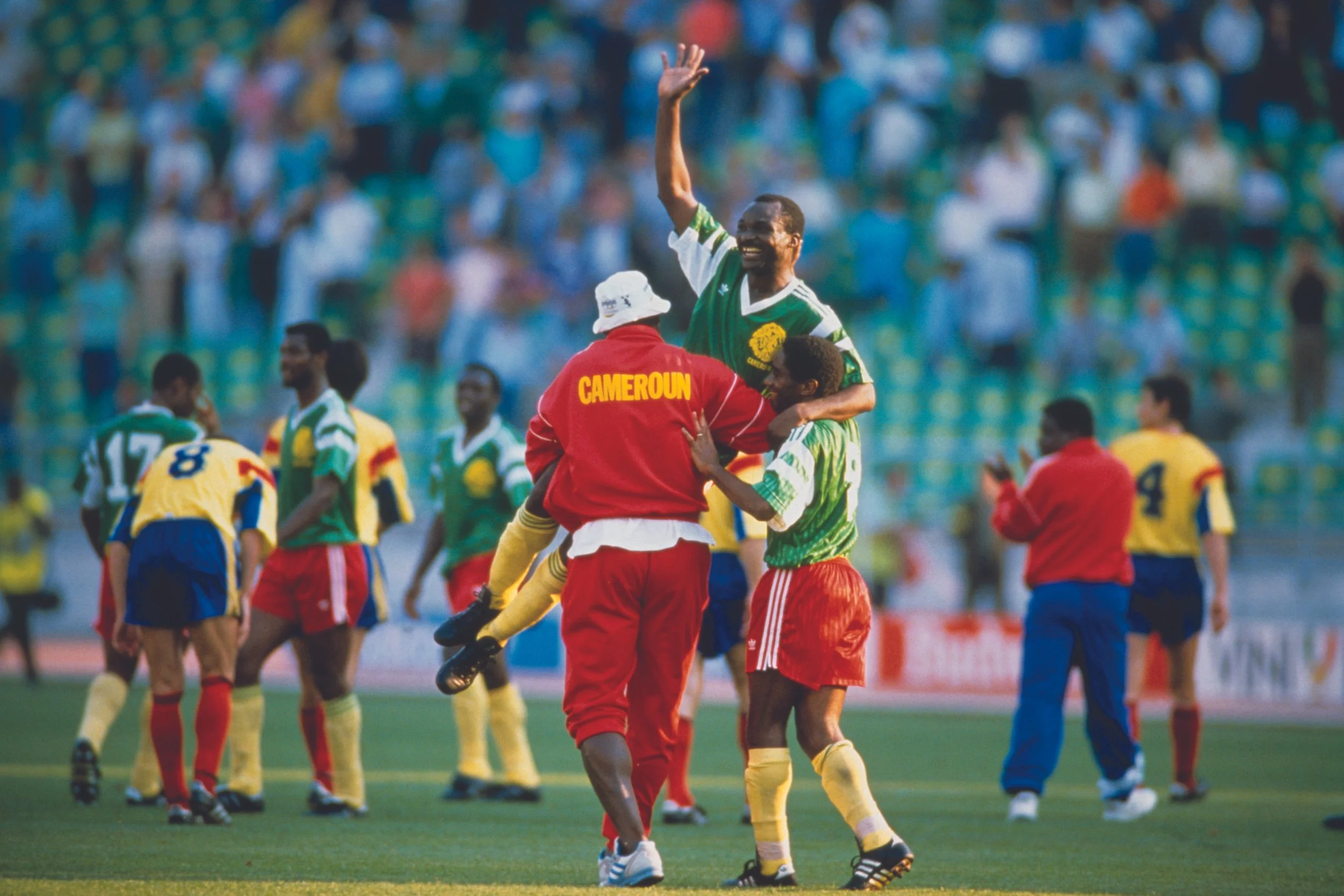
That is where the appeal of ‘one last World Cup’ becomes so intoxicating for the unwary and un-self-aware. For great players getting older, the final tournament is not just an ending, it offers a chance to make what a player has learnt really count. On the biggest stage possible. And if they are a true champion, true champions always think they will win. Even when no-one else does.
Where the romance of that idea is obvious, the football case for it is stronger than people think. Veteran goalkeepers – as illustrated – usually process danger better and make few mistakes. Experienced centre-backs often need fewer physical recoveries because they tend to stay in position more than other roles. Senior strikers can disappear from a game for long stretches and still decide it with one conclusive action. And that’s when appearing off the bench or from the start. Safe to say that the World Cup loves the idea of youth in its marketing campaigns, but the teams themselves often rely on age to define the competition’s ultimate resolution.
The data supports the idea that this is not just nostalgia’s lie. In 2022, the tournament’s player birth-year distribution peaked around 1997, meaning many players were 25 or turning 25 during the competition, but the field still stretched from teenagers to players in their late 30s. With age often adding that bit of motivation. It can feel almost preordained. Then-35-year-old Lionel Messi’s Argentina in Qatar being a case in point. The third oldest side in the tournament with an average age of 27.9.
As England squads go, this one – with a fair wind on injuries – will definitely include a few players into their 30s. In the form of goalkeeper Jordan Pickford (32), plus Jordan Henderson (35) and Harry Kane (32). As well as three other ‘likely’ squad members in, Dan Burn (34), Harry Maguire (33), and John Stones (32). The rest would be in their 20s.
England’s projected 2026 squad points toward a side that is older in the useful sense rather than it unduly aging. Strung cross the midfield would be the likes of Declan Rice (27), Phil Foden (25), Bukayo Saka (24), Elliot Anderson and Morgan Rogers (23). And with the most-likely Thomas Tuchel era side being Jordan Pickford, Reece James, John Stones, Marc Guehi, Nico O’Reilly, Declan Rice, Elliot Anderson, Bukayo Saka, Morgan Rogers, Anthony Gordon and Harry Kane. An average age of 27.2.
That is not the profile of a transitional team, it is the profile of a side carrying accumulated responsibility and shared history. If those players arrive in North America with the experience of having already lived through multiple major tournaments and European campaigns, England may finally look less like a project and more like the finished article. And accompanied by the ‘right’ levels of fan expectations; arguably the first time since 1970.
The setting could help too. A World Cup across the USA, Canada and Mexico will demand more from squads than Qatar did, not only in footballing terms but in travel, climate adaptation and tournament management. The larger the competition footprint, the more valuable seniority becomes, because experienced players are often better at pacing themselves over a month and better at understanding that not every match has to be won in the same way.
There is, of course, a limit. Age only helps when it can still get around the pitch. A squad can become too dependent on reputation, too slow in transition and too vulnerable to the repeated pressing and athleticism of younger and less conventional opponents. Often have the likes of Gerrard, Lampard, Rooney and Beckham – England’s golden generation of the past – spoken of feeling overrun in World Cups when facing numerical disadvantages caused by their own tactical naivety, exacerbated by a far more physically able opposition.
In this, the global nature of the World Cup punishes what can only be described as decorative seniority, or institutional arrogance. It rewards older players only when they remain decisive and useful within winning systems, and that is why the best veteran stories are only ever about function and effectiveness. Never sentiment.
That is the real global lesson here. The World Cup is not a young person’s tournament. By contrast, it is an event that exposes what age can do when it is properly managed. A 19-year-old can change a game. A 30-something-year-old can run it.
England have often hovered near that balance without quite nailing it. Their 2018 and 2022 squads were close enough to the historical pattern to contend and compete well, but not yet complete enough to dominate. If 2026 pushes them slightly older, as it looks like it will, that may not be a symptom of decline at all. It may be the moment they move the age profile to what amounts to a proper tournament-hardened outfit. And if that happens, it will reflect the same truth that World Cup history keeps repeating. That the competition is rarely won by the youngest team. Or the oldest.
And to borrow from the now-retired but certainly evergreen Andrea Pirlo: “years, lovers, and glasses of wine are things that should never be counted, football is played with the head.”
Such a statement from the World Cup winner reminds us that ‘one last World Cup’ can still be a genuine competitive act, and that the closing stages of the tournament often belong to the player who has already seen enough to stay calm when everyone else is beginning to fray. With victory the preserve of those who can pick a side of the net, walk up to the penalty spot without their knees giving way, and execute the simple skill of kicking a football 12 yards more accurately than their opponents. For as sure as eggs are eggs, it will happen. Let’s hope this England team is ready to step up.