

Archipelago-go
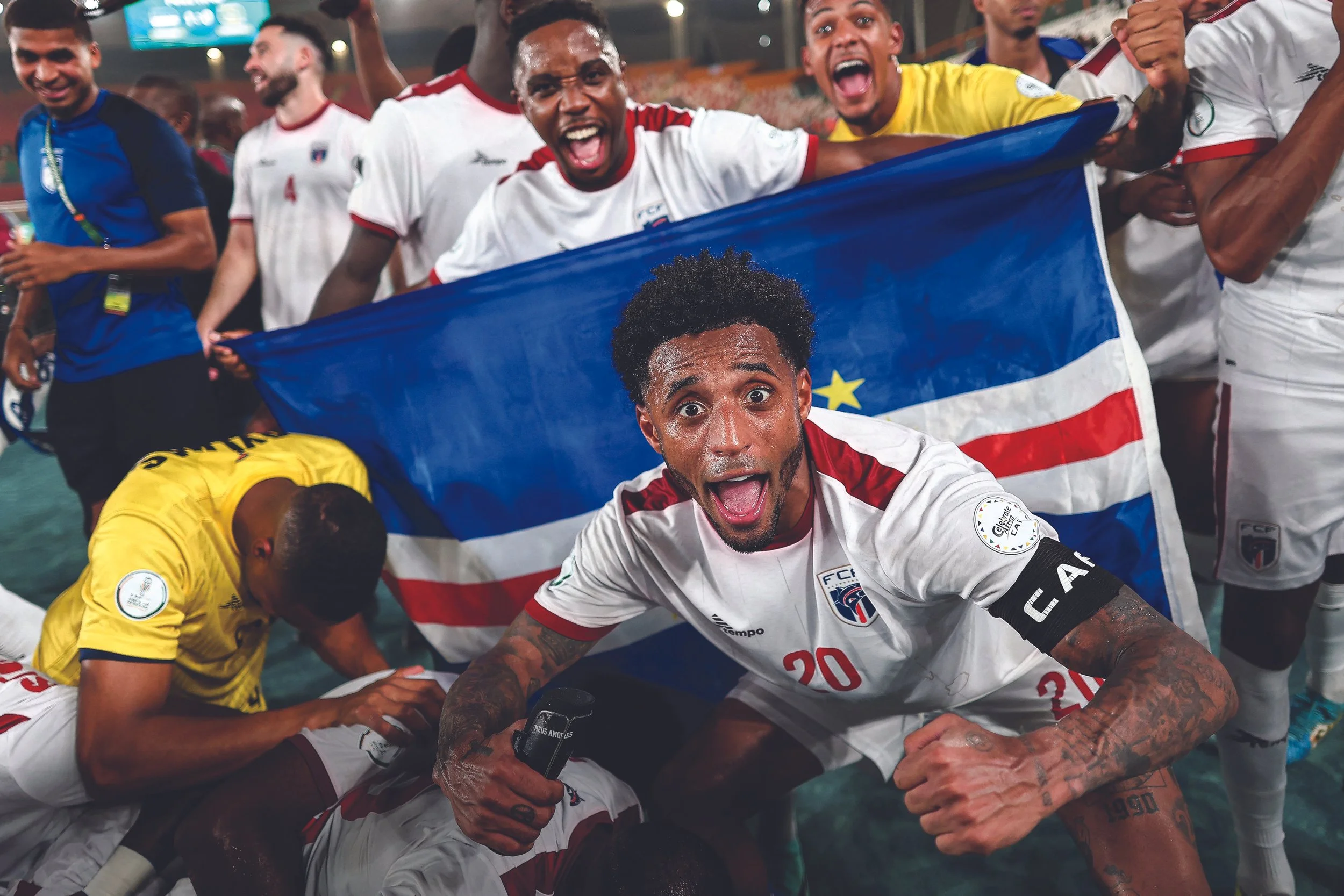
Much has been made of FIFA’s $1billion World Cup expansion to 48 teams. With four debut nations bound for North America, the documentation of who they are and how they got there is told through the journey of one unlikely Cape Verdean.
“These are exciting times, for us, aren’t they?” Opens Cape Verde’s Roberto ‘Pico’ Lopes, who only recently found out he could play for his nation via an inconspicuous message on LinkedIn. Of all places. His question a rhetorical one, of course. The 33-year-old is speaking to Pitch from New Zealand, where the Blue Sharks are mid-way through their pre-World Cup training camp. It's a late night for him, after a long day training in the Land of the Long White Cloud, but the Shamrock Rovers centre-back sounds unhurried, good-humoured, and more than happy to chat. Which is fortunate, for us, because there is rather a lot to discuss. Cabo Verde – to give the country its official name – have never been to a World Cup before. This summer, in Canada, Mexico and (mainly) the United States, that all changes.
Raised under the cold grey skies of Crumlin, South Dublin, to a Cape Verdean father, the six-foot-tall defender adds on introduction, “I feel like I’m in trouble when anyone calls me that [Roberto], call me Pico.” Speaking with a strong Dublin accent, he has accrued over 40 international caps for the archipelago and is one of many in the squad whose roots span a diaspora that stretches across Europe.
As journeys go, it’s a curious one. Picking up the social media-based story, Shamrock Rovers’ club captain continues: “If you’d asked me before making my Cape Verde debut, I’d never have said I’d become an international footballer,” he says. “That’s despite the fact that the manager [then Rui Águas] had been in touch, and I’d accidentally blanked him.” Which feels an obvious place to start…
“Sorry, I don’t speak Portuguese, but I’d love to be involved if it’s not too late.”
“I’ve been a member of LinkedIn since college and remember connecting with Rui after his name popped up. Not so long after, I received a message from him. It was in Portuguese…”
A year it sat un-opened. Hidden amongst the empty expanse of LinkedIn’s drivel chamber. Unbeknownst to him, ‘Pico’ was sat on a golden ticket to football’s biggest event.
“I thought it was spam so took no notice,” he explains. “Almost a year later, I got another message saying: ‘Did you think about it?’ I was like: ‘Oh, what’s this?’ So, I translated the original message and found out they were looking at players who might be interested in declaring.”
Lopes leaves space for a laugh before continuing the story that has since contributed a good amount of free PR, and semi-regular appearances on late night chat shows: “I was straight back in there apologising with my tail between my legs saying: ‘Sorry, I don’t speak Portuguese, but I’d love to be involved if it’s not too late.’ Lucky enough, Rui said: ‘That’s great, give me your mobile’. And we went from there.”
It's a peculiar way to start an international career but lo and behold, Lopes made his debut, playing 90 minutes in a 2-1 friendly win over Togo in Marseille, then played in a behind-closed doors match against ‘Les Phocéens’ themselves in October 2019. Now, the proud Cape Verdean is about to take the nation to their first World Cup.
“Cape Verde has always been part of my identity but mainly because there are not many Roberto Lopeses floating around in Crumlin. It’s only really since playing that I’ve delved deeper into the culture and the heritage,” the right-footed defender adds.
“It’s really inspiring to be part of when you see how much playing for the country means to the squad, how dedicated they are to it, even in friendly matches with no fans. And my Da’ [who emigrated from the Islands aged 16 before meeting ‘me Ma’] still to this day, is always beaming when we talk about football,” says Lopes of his father, Carlos. “Family from all over have reached out to share their congratulations; uncles were re-posting content from various Cape Verdean pages, and I've been contacted by cousins I didn't even know existed. There's just a genuine excitement running through it all, which fills you with pride. And to think I nearly missed out on all that…
“When I joined there was a well-established group. The skipper, Ryan Mendes, and others have been around a long time, they’re legends of Cape Verdean football, have been there, done that, and got the proverbial T-shirts. To add World Cup stash to their wardrobe feels special.”
To understand their common cause, you need to go back to 5 July 1975, and the moment the national flag was raised for the first time at Estádio da Várzea in the capital city, Praia. The ‘Green Cape’ was declaring itself independent from Portugal. There was no national football team then. Nor would there be for another three years – a 1-0 defeat to Guinea on 29 May 1978 marked their first fixture, before formally joining FIFA in 1986. It wouldn’t be until 2002 that the nation had a crack at qualifying for any global event.
Exactly 100 days after their aforementioned independence turned 50 years old, the players had done their work five miles away at the 2010-built (and China-funded) National Stadium. That ‘work’ amounted to a 3-0 win over Eswatini to see them qualify for Canada, Mexico, and USA ’26 and now the city came to meet them.
“You only have to look at President José Maria Neves, who compared the country’s World Cup qualification to ‘a new independence,’” Lopes says of the moment, “to see what it means.”
The President’s words read as follows: “Independence Day and 13 January 1991 [when the first multiparty elections were held] are the two symbolic dates that have united our people. This World Cup qualification can already be considered the third defining moment of our nation.”
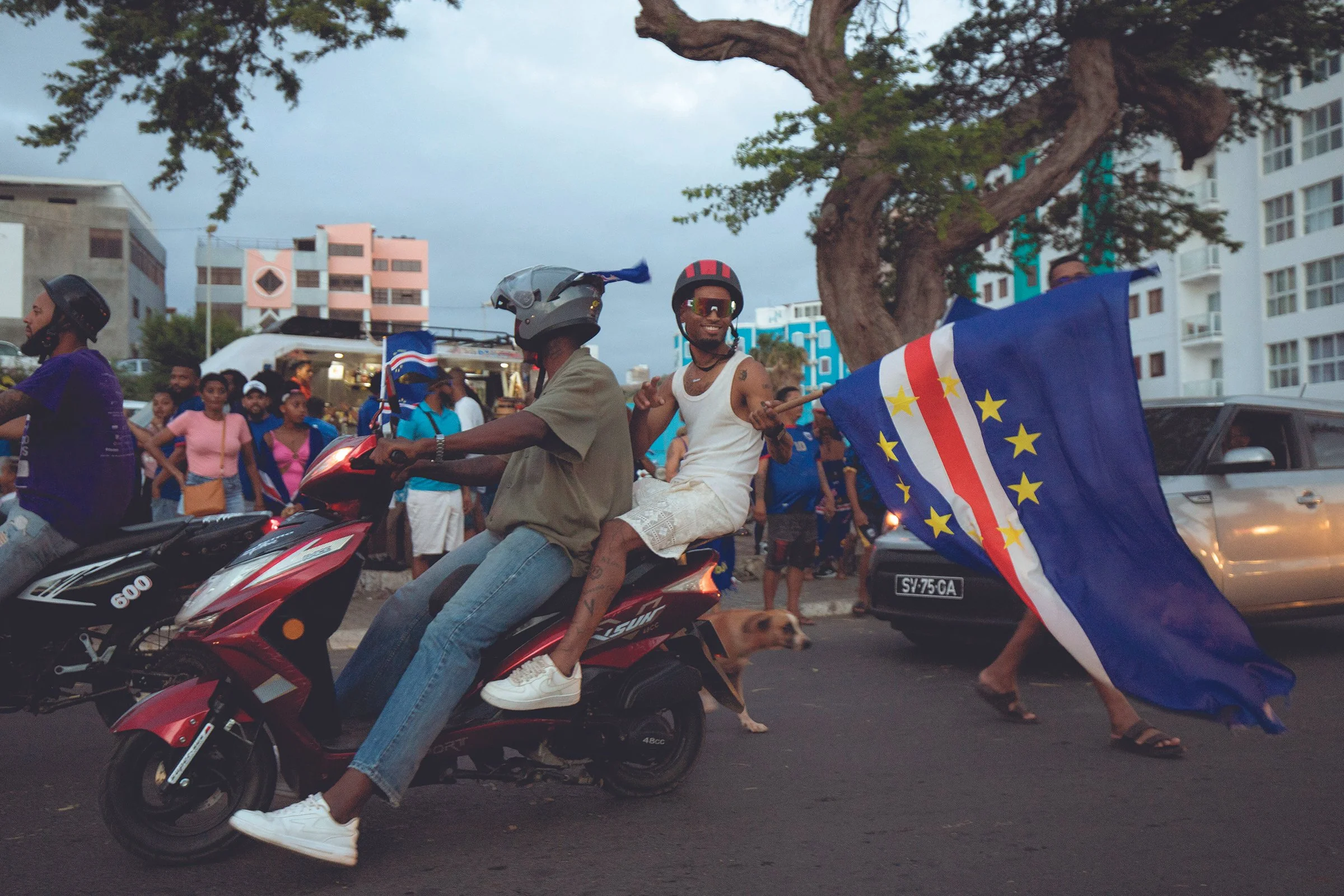
Lopes, a relative outsider to such scenes had one word for the celebrations: “Bonkers. Honestly. The country got time off for the games against Cameroon and Eswatini. I couldn’t party too hard as I had a flight booked the next morning to see the birth of my child. Two of the biggest moments in my life happened back-to-back, aged 33. It was a special week.
“Driving through, on the way to catch my first flight, flags were hung from balconies, bars, restaurant windows and car doors. Local authorities had granted the afternoon off in acknowledgement of what might unfold. And it looked like most people would require the morning too.”
There were 15,000 present to watch the archipelago’s closing qualifier against Eswatini (population 1.25 million), all in the knowledge that a win would see them through over Cameroon in CAF’s qualifier Group D.
Underpinning this contemporary success was a quiet revolution that began in 2002, shortly after Cape Verde's first World Cup qualifying campaign had ended ingloriously in a preliminary 2-1 loss to Benin. A forward named Lito – who had emigrated to Portugal as a young man and gone on to make more than 200 appearances in the Portuguese top-flight – began the process of recruiting players from the vast Cape Verdean diaspora, the so-called 11th island. This community of emigrants, in number, exceed the population of the archipelago itself. Of the 25 players called up for 2026’s final two qualifying matches, 14 were born outside Cape Verde's borders. Without them, none of this happens.
There is, Lopes confirms, “no one really playing in Cape Verde anymore. The camp is serious but the manager knows when to relax and enjoy it,” the defender says of ‘gaffer’ Bubista, who was also a centre-back in his day.
Pedro Leitão Brito, by birth name, has overseen this extraordinary qualification campaign. “He gets us playing to our strengths, real ambitious football, and makes sure we're enjoying camp. I think the phrase is overused, but this really is once in a lifetime. He understands the importance of team spirit, bringing everyone together and making sure we’re all speaking the same language. Literally.”
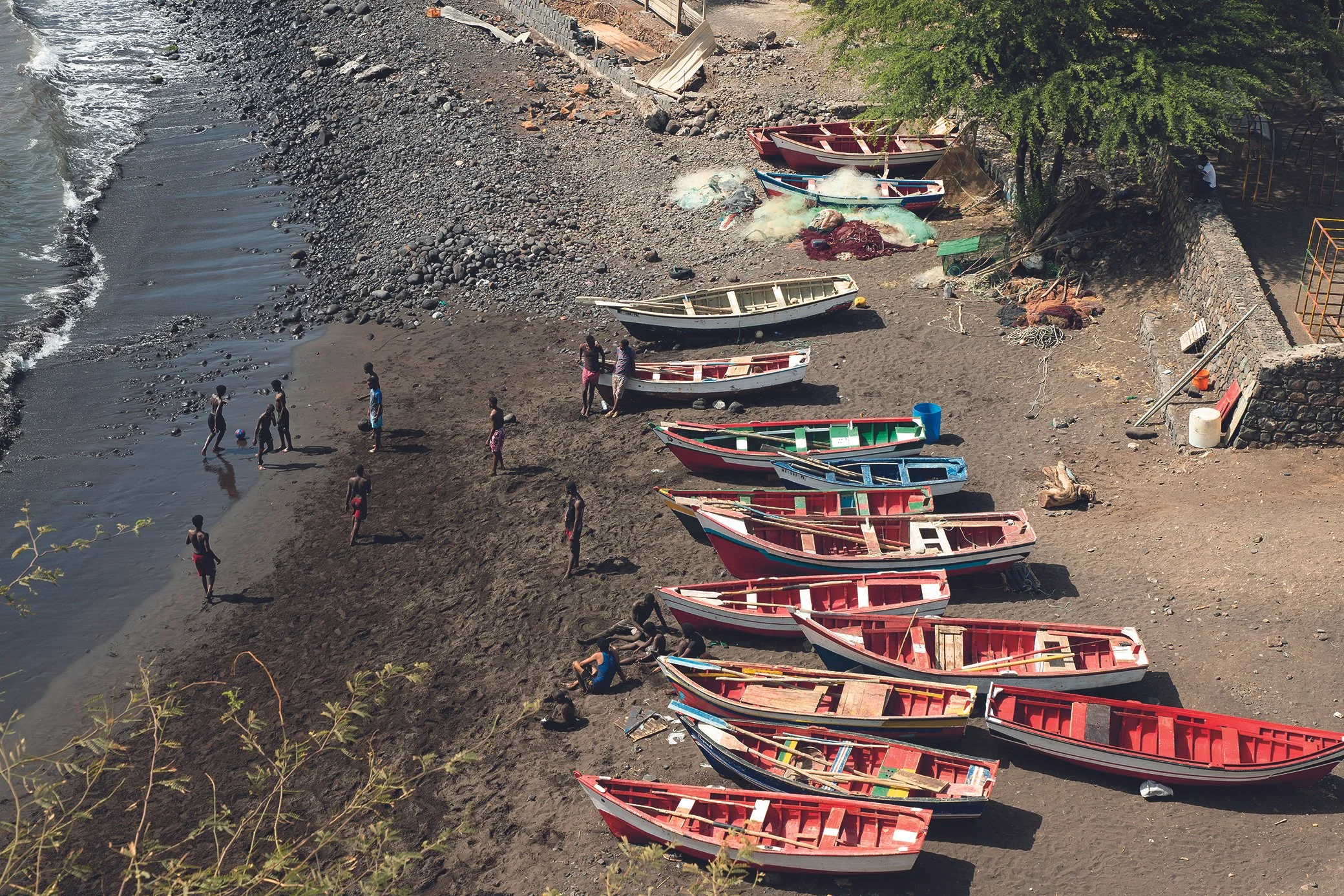
Jumpers, or trunks, for goalposts. Football on the beach on the island of Santiago, Cape Verde.
“Unity among people with different mindsets and ways of life can only be achieved by respecting the uniqueness of each player,” the head coach said after their World Cup-affirming win in Praia. Cape Verde-born goalkeeper, Vozinha, and defender Stopira are playing this season in the Portuguese second tier. One more member of the qualifier’s starting XI is also in that division and the aforementioned captain is with Kocaelispor in Turkey’s Süper Lig. The remaining eight starters were with top-division clubs in Portugal, the US, the United Arab Emirates, the Republic of Ireland (Lopes), Romania, Russia, the Netherlands, and Cyprus.
Bubista, it seems, has adeptly built on the inheritance of his advisor João de Deus – the architect behind the national team’s development between 2008 and 2010. In his tutelage is an emphasised importance on the role of the Creole language in creating a mature group that pulls in the same direction.
“It’s the official language of the national team,” Bubista said in the build-up to this campaign. “Some players used to speak only English, but now they’ve learned Creole. Sometimes the guys try to speak other languages among themselves, but I don’t allow it, to keep our Cape Verdean identity intact.”
Equally important has been the growing professionalisation of the Cape Verdean Football Federation, which – despite limited resources and a staff of only eight – has made the most of what it has. The $10.5m the FCF stands to earn from reaching the World Cup finals group stage will boost its finances dramatically. And who knows what could happen thereafter.
With qualification already a success beyond previous imaginations, the question of what ‘winning’ looks like in North America is met with characteristic directness from ‘Pico’ Lopes. “We’ll try and be competitive,” the 33-year-old continues. “We don't want to just be there to make up the numbers. The goal is to progress, to try and get out of the group. It'll be difficult with some top teams, but we have to believe.”
Their opening game proper is not for the faint-hearted. On 15 June, the Blue Sharks will walk out in their brand-spanking-new Capelli Sport kits at the 75,000-seat Mercedes-Benz Stadium in Atlanta to face Spain. The world’s second-ranked team. One of the finest footballing nations on the planet. At, arguably, the tournament’s most impressive venue.
“Just because we are a small nation, it does not mean we can't play football,” Lopes concludes, somewhat inspirationally but now definitely speaking in clichés. "Look at Iceland in 2016. We know we have players that can hurt teams. And there are some great teams, take Italy [and Ireland], who won’t have the privilege of making the journey across the Atlantic.”
With the closing preparations of this now-50-year journey well under way, Pico tells me his wife – a religion and history teacher, which seems apt for such a journey – will be there. Friends too.
“Tickets”, by his account “are on me.” That might even be worth a message on LinkedIn…