

Silk Road

In a world where LIV exists alone from laugh and love, and where it feels like a life’s work is required to separate ‘cartels’ from ‘competitive balance’, Kieran Longworth speaks to two lawyers who have been there, done that, and got the proverbial T-shirt. Or suits, for that matter.
A group chat titled “Sporting Lawyer Leg Ends” feels as good a place to start as any when searching for a means to dissect the litany of legal cases – and their coverage – in and around sport in 2026. In said chat’s members are two professionals who quietly, and often invisibly, hold sports’ many threads together when competitions, boards, and broadcast deals threaten to unravel.
Those in question are Max Duthie, a solicitor and partner in the sports group at Bird & Bird, a six-foot-four ex-blindside flanker whose legal career followed two rugby union blues at Cambridge and a season in France; and Paul Harris KC, a barrister and former Cambridge football blue whom The Times has likened to Manchester City’s ‘Rodri’ of the courtroom. They have both appeared, and continue to appear, in cases where breakaway leagues like LIV Golf and the European Super League are argued into being. Or not being as might be the case.
Our polite, and necessary introductions in said group chat went a little like this:
Intro: ‘Would love to interview two legendary sports lawyers. Thought you might know some?’
Max Duthie: ‘This begs many questions, including: What is it you want to know? And why you think two feckless misfits (no offence Paul) might be able to help?’
The other fixture in this equation, Harris, is more matter of fact about such a task, “yes me too” he later replies to Duthie’s “happy to help”.
A member of the King’s Counsel (the title awarded to individuals who have demonstrated exceptional skill and experience in advocacy), Harris has represented Mercedes GP, acted for Manchester City in the Associated Party Transaction (APT rules govern sponsorships between clubs and companies related to their ownership) arbitration, appeared in major commercial disputes and stood before FIA stewards in Abu Dhabi in 2021. He is, according to Chambers UK, “an aggressive and very impressive performer… one of the top silks around… very persuasive, agile and direct.”
“It’s a lot of reading,” the Mancunian lawyer says, almost hesitantly, at the mention of such praise. “I didn't particularly have a yearning to be a barrister growing up. I suppose what I share with many of the sports clients, particularly if they're athletes or teams – as opposed to regulators or leagues – but not excluding them, is that I am competitive like they are. When I participate, by and large, I would prefer to win. It’s the same when I go to work.”
Both lawyers know each other from their University days at Cambridge, and according to Harris “meet up outside of work from time to time”. The pair are also well versed in ‘the industry’s’ biggest cases, working on the live case that involves the Premier League’s dispute with Manchester City. This is something both are unable to comment on at present.
For context, exactly three years ago, an article on the Premier League’s website set the cat among the proverbial pigeons. Under the heading ‘Premier League statement’, football’s wealthiest and best followed domestic league announced disciplinary charges against Manchester City – then-champions of the two previous seasons, and the two to come.
The charges, estimated by some to be 115, covered years of alleged wrongdoing that can be broken down into a couple of key chunks: accusations that City had failed to provide ‘accurate financial information’ to the league and to properly ‘cooperate… and assist’ with the subsequent investigation. Little new information has followed since. Outside of the settlement in their aforementioned dispute over APT rules, that is.
This feels the right time then to ask the right questions. One only has to scan the headlines to realise that ‘Prem vs City’ isn’t the only major legal disagreement in sport. Far from it.
The Breakaway League…
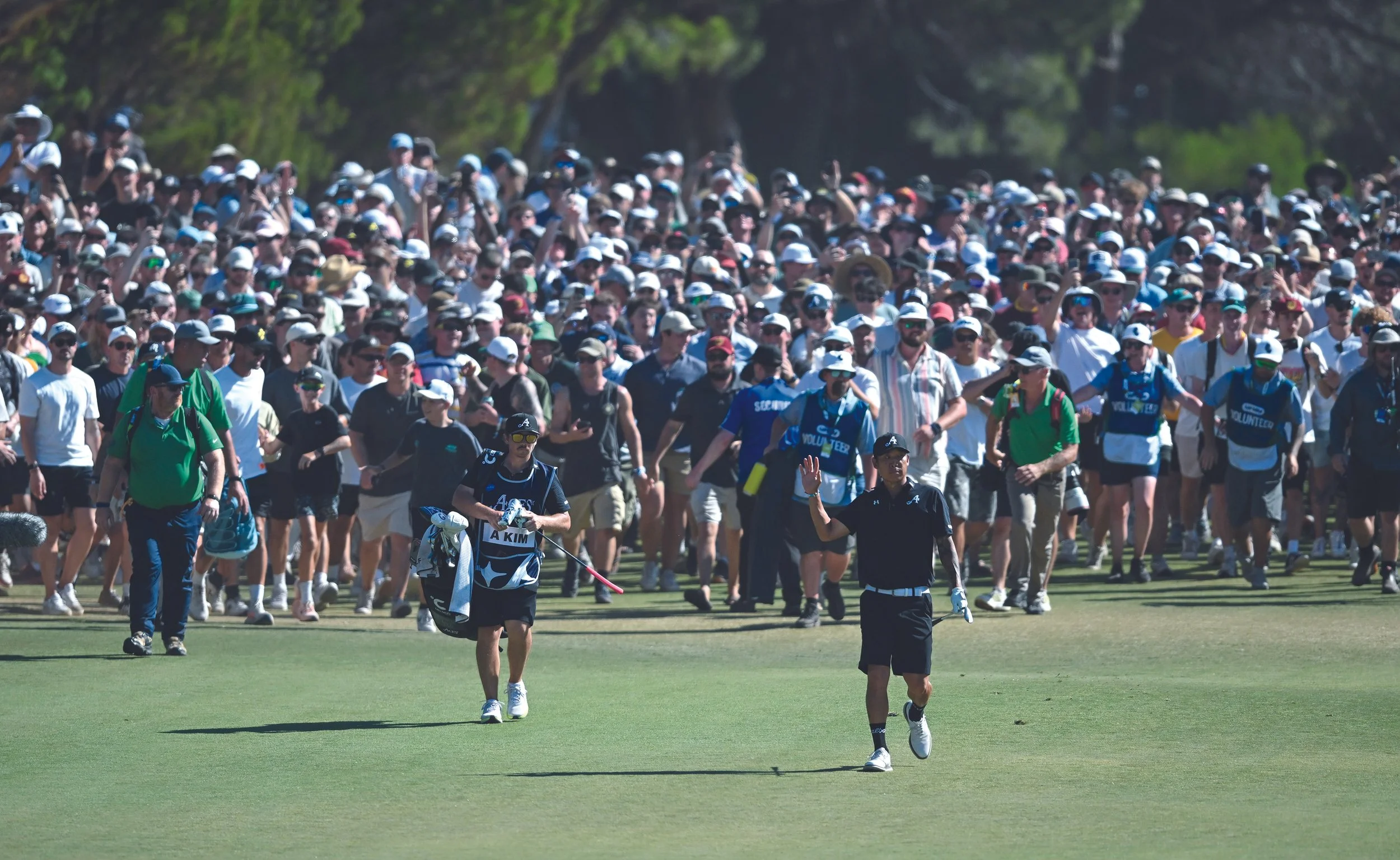
In the LIV-PGA debacle, Duthie is willing and able to offer his view. “Golf is such a fascinating sport in the way it is built structurally. Because it’s not like many team sports such as football or cricket where you have FIFA and the ICC. Operating as powerful international federations, these bodies organise the biggest events in their respective sports, and below them continental federations, national associations, leagues and clubs. In golf the model is different: the big tours, as well as the organisers of the majors and the Ryder Cup, hold some of the most powerful positions, rather than those being held by national or international governing bodies,” he says – clearly interested by the subject.
The 56-year-old is talking about how the PGA – as an organisation – own the PGA Tour, but don’t own all the rights to the majors. The British Open Championship, for example, is owned by the Royal and Ancient Golf Club, the R&A. The added complication is that for a player to qualify for said majors, they’re required to win PGA or DP World Tour events, maintaining a top-50-100 World Golf Ranking, or advance through various regional qualifying stages. Most of which are played under the PGA’s vast umbrella. Past champions also have a rite of passage, of course. And the Masters, as another oddity, requires invitation.
“I think Rory McIlroy has spoken eloquently about the ongoing rift between LIV and the other entities in golf,” Duthie offers, “he speaks honestly, and I think that’s why a lot of fans love him so much.”
The Northern Irishman has historically taken a strident position against the big-money venture, which tempted a host of top names and disrupted the established order of the 97-year-old PGA and 54-year-old European Tours. The Grand Slam champion himself has also since admitted he has been “too judgmental” in his criticisms of those who joined the breakaway LIV Golf Tour.
“I think Rory McIlroy has spoken eloquently about the ongoing rift in golf, he speaks honestly, and I think that’s why a lot of fans love him so much.”

For further legal context, a dispute began in 2022 when LIV Golf, backed by Saudi Arabia’s Public Investment Fund (PIF), sued the PGA Tour for anti-competitive behaviour, alleging that the Tour suspending players who defected to LIV violated U.S. antitrust laws.
This led to the 2023 Jones v. PGA Tour decision where it was ruled that PIF could not claim sovereign immunity (a doctrine under which a federal or state government cannot be sued without its consent) in the ongoing litigation. The ruling exposed PIF to U.S. discovery processes, which required the fund to produce documents, records, and internal communications related to its investments in LIV and the PGA.
To complicate matters further, June 2023 welcomed then-PGA Tour Chief Executive Jay Monahan and PIF governor Yasir Al-Rumayyan to the world’s television screens. There, they stood in front of cameras and announced a ‘framework agreement’ that pledged to unify men’s professional golf. So friends now, right? Two years on, little has changed.
The PGA Tour has introduced signature events, modified winnings, become a for-profit organisation, received billions in funding from the Strategic Sports Group (SSG) – a group of considerably wealthy sports owners – launched a player equity programme, shuffled its board, elected new player directors, and suspended 95 ‘LIV-defects’ in all.
The bottom line, however, is that the two tours are still separate entities, and world-class talent is divided. Up to and including the likes of major winners Phil Mickelson, Dustin Johnson, Bryson DeChambeau, Jon Rahm and Australia’s be-mulleted Cameron Smith. With Brooks Koepka and Patrick Reed making the journey back to the PGA at the start of 2026.
The law, Harris insists, applies broadly the same way whether it is regulating a sporting undertaking or one that manufactures tyres or concrete. And as the only Silk in the UK to have appeared in both of the first two leading collective action appellate authorities, Merricks v. Mastercard in the Supreme Court (2020) and Gutmann v. LSER in the Court of Appeal (2022) he knows as much about ‘the law’ as anyone.
“The LIV case also shares a lot of parallels with many other cases that I've worked on, in other sports,” he says. “Which are, if you like, the existence of breakaway leagues.
“In no other area is an incumbent who's supposedly commercially thriving allowed to say, ‘You know what? I don't fancy having a competitor, so you shouldn't be allowed to enter the market at all. I’m going to deny you entry.’ But in the world of sport, there are other competing objectives that are very much intertwined with that notion of allowing competitors to come in, because the consequence of that is someone must miss out.
“There was a similar battle in India, with the formation of the IPL,” Harris continues in what amounts to a 19-year throwback to 2007. “The year before the IPL came into existence, a different – and substantially rich – investor in the sub-continent had created the ICL. There were all kinds of issues about where each fitted into the calendar, rights of access, contracts with players. The BCCI and IPL won out, obviously, and that shaped the modern landscape of cricket as we know it.”
In sport, then, you have to have a degree of what Harris calls “competitive balance. It’s lawyers’ jargon,” he says, “because if somebody wins everything all the time, and are perennially the best, it becomes boring as hell. That then risks commercial collapse because, being boring, people don't watch, sponsors don't sponsor, broadcasters don't pay. So in that sense, you've got to balance competition.”
In some sports, Harris says, “teams join together with their rivals, to reduce the output or ‘supply’, and increase ‘demand’, thus affecting the price. That's broadly what a cartel is. But take an obvious example: Premier League football. That's exactly what they do. The 20 member teams get together and sell the rights to their matches as one rather than separate entities. Not every Premier League match is broadcast, and thus of course, the price goes up. That's exactly what they want.
“But that set-up is legal because it has countervailing benefits that outweigh the reduction in what would be called production. The argument is that more money is created that can trickle down the football pyramid to grassroots sports and various other things.”
Competitive Balance…
Salary caps and Financial Fair Play, Harris adds, follow a similar logic. “Normally wage caps would be highly illegal. You can't go around saying, ‘Let's get together and not offer the people we employ what they're worth in the market because it suits us not to have to pay them as much.’ You're not allowed to do that normally. But in the world of some sports, it is said to contribute to stability, that is better for the sport going forward, and one can see the argument.
“Promotion and relegation complicate that relationship further. In the States, broadly speaking, they have closed franchise models without relegation and promotion. Powerful competitive-balance mechanisms are then required so that the product doesn't become boring. Take the NBA draft as a classic example. The worst team gets to pick the best player from the next cohort of young players. You pretty much have to have something like that, otherwise your closed system is going to be dull, and therefore, worthless.
“Us Europeans find that very hard to compute and there exists a bit of a clash there. You see that in football (the soccer kind) a lot. There are so many American owners now in the English pyramid. When that inevitably gestated into the idea of a European Super League – an Americanized and effective closed shop – the backlash was absolutely immense.”
Duthie picks up the tale on the same stride length: “The proposal of things like the ESL in football shows that the sporting landscape as we know it could change in an instant. The league would have ring fenced a fixed number of the best teams, and thrown relegation out of the window.”
A flanker in rugby union’s early throws of professionalism, Duthie sees the same fragility within the oval-shaped ball game’s structures. ‘The Prem’, as it’s now formally known, has announced that it would be a closed shop from 2029. The league hasn’t seen promotion or relegation since Saracens made their way out of the Championship at the end of the 2020/21 season.
“To some extent, it becomes a question of physicality,” continues the back row forward. “Rugby union is necessarily different from football because of the strength required and the collisions that take place. There are limits to how clubs from different ends of the rugby spectrum could play against each other safely.
“You take a fully professional 140kg rugby player and put him up against a part-time accountant or whatever (who cannot spend hours in the gym each day), and it might become dangerous. I don’t think many teams could make their way up from non-league or division-4 like Wrexham have done in football.”
As fans, it’d be easy to believe that sport will follow the same structures for the foreseeable. But will it? “For sport to survive, at a bare minimum everyone has got to believe it involves an authentic, legitimate contest, Duthie continues. “If, for example, it came out that for a number of years clubs in a particular league had been fixing their matches, there is a risk that many fans would turn their back on that league, or the sport as a whole, and it could cease to exist as we know it.”
Keen and able to bring his points back to the oval-shaped world that he has spent so much time in, the ex-pro – cauliflower ears and all – continues. “Going back to the question of promotion and relegation, ring-fencing does of course throw up some legal issues around competition law, which rugby will have to deal with – I imagine teams like Ealing and Doncaster aren’t too happy with the Prem’s announcement to restrict promotion and relegation in the league by 2029. There were some mismatches when I was playing through the nineties, as the sport went professional and some teams progressed faster than others.”
It’s not just on the field, where the ‘big man’s’ impact was felt. Duthie worked on bringing South African teams to the United Rugby Championship (URC) in 2018. And while that league (comprised of four teams from Ireland and South Africa, perhaps soon-to-be two from Wales, Italy, and Scotland) is geographically diffuse, with credit where it is due, the South African’s involvement has added no end of entertainment. And size.
“The club game is pushing on but the sport is reliant on the money and interest that comes in from internationals,” Duthie adds on the subject. “The Six Nations is an exceptionally popular event, and delivers great drama seemingly every year. And I can see why club competitions would love to share that popularity.
“The game moves on too, the in-play rules are vastly different from when I was playing. Look at head-collisions. The position is much-improved. The game is constantly evolving and – in terms of foul play – there’s much less that players can get away with now because of all the cameras and a sophisticated disciplinary regime. Therefore, people rarely cross that line. Even when rules don’t change, the way a game is refereed can. That’s where governing bodies need to be – and usually are – clear in their messaging about how the game should be played.
“Of course, there are rugby discipline cases where we have no reliable video footage of the relevant incident, and so (as one would in other areas of the law) we have to rely on other evidence, including witness statements from the victim and others nearby.
“That happened, to some extent, in the ‘Bloodgate’ scandal in 2009, where Harlequins and some of its representatives were charged with fabricating a blood injury to one of its players in order to achieve a tactical advantage in a Heineken Cup quarter-final against Leinster. I was prosecuting for the European Rugby Championship (now known as European Professional Club Rugby) and, despite the limited video evidence, the charges were eventually upheld. That resulted in some pretty long bans for the people involved, which I took no pleasure in at all.
“But you have to do your job as best you can. There was some footage of the player [Harlequins winger Tom Williams] picking something up off the floor and it seemed to show him putting something in his mouth shortly afterwards, but it was far from definitive. That’s still a grey day for rugby, but it is one that set a precedent, and hopefully it won’t happen again.”
As far as difficult cases go, when asked posthumously if he could top his mate, Paul Harris is quick to answer.
Right and Wrong…
Established as the leading silk in the world of Formula 1, as well as acting for Mercedes GP and Sir Lewis Hamilton at Abu Dhabi 2021, and in multiple other disputes, up to and including: ‘Pirelli Tyre-gate’ & ‘Ricciardo fuel-flow’ & ‘Brawn double-diffuser’, Harris says that “the FIA stewards behaved in such a way in December 2021 at the Abu Dhabi GP that the result of the World Championship was altered.”
The lawyer is talking about the final lap of the World Championships. Following a lap-52 crash from Williams’ driver Nicholas Latifi, FIA Race Director Michael Masi sanctioned the clearing of lapped cars between Hamilton and Max Verstappen for one final lap of racing and the stewards refused to overturn his decision.
It's a surprising admission from someone who, thus far, has offered such a balanced view on all matters, but Harris continues: “This is one of the highest profile sports in the world and within a couple of months, the FIA admitted they hadn't applied the rules correctly, blaming Masi for ‘human error’. And yet, the results remain in the altered form. I think it's very unfortunate for Sir Lewis Hamilton that he didn’t get the particular additional championship. That would have made him the greatest of all time – statistically speaking.
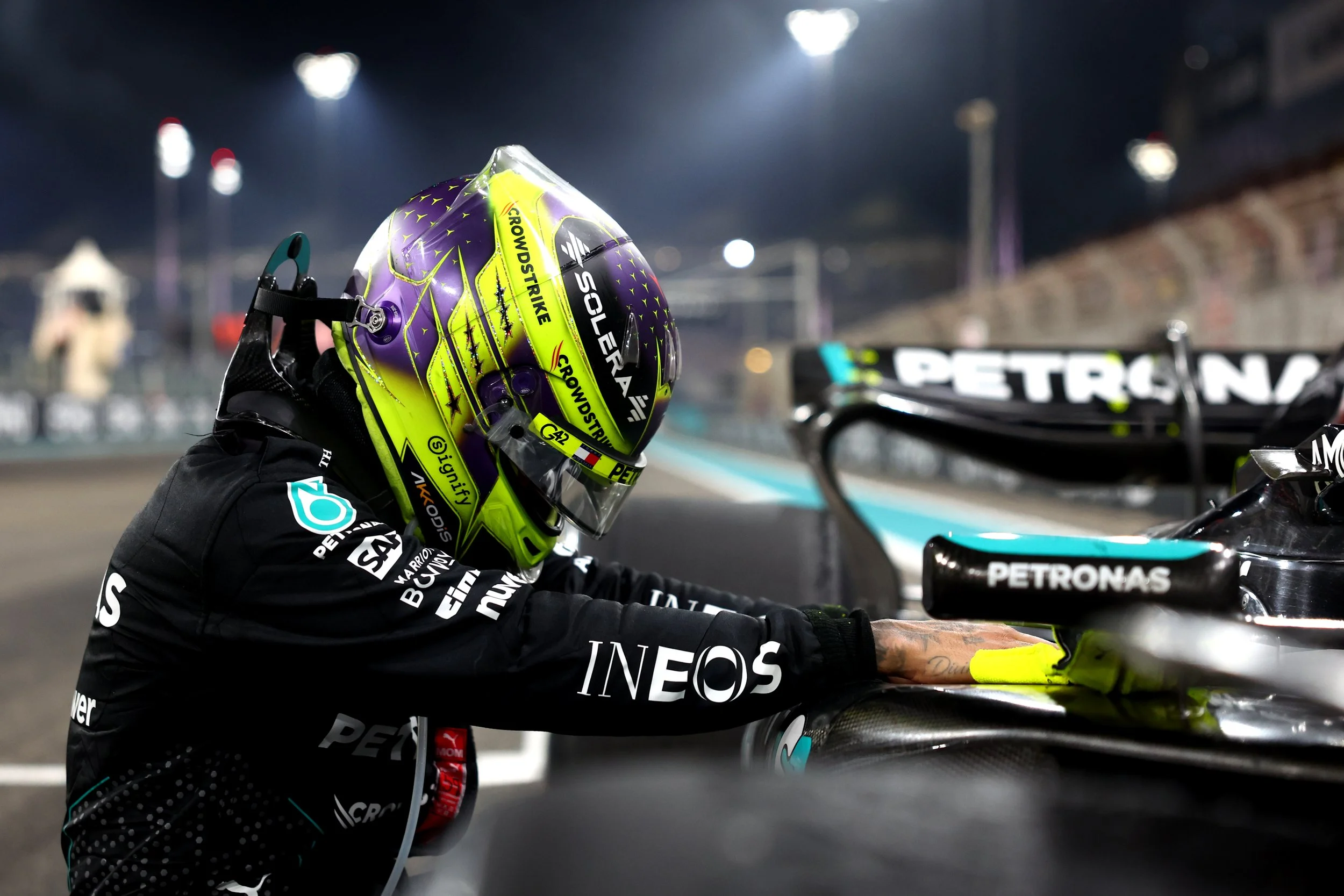
“One needs to think only of Lance Armstrong, and closer to home, Saracens, where they've got a big points deduction and now some championships taken away for precedent. As it happens, the Abu Dhabi 2021 result could have been corrected within an hour or two at the end of the race, and indeed we went to the stewards' hearing and argued that it should be.
“I am never surprised to encounter outcomes. There are legal arguments and legal rights and wrongs, and then there are the ways in which things actually happen. They are often very, very different.
“Lewis was very dignified about it, as the gent that he is. It wouldn't be the first time I've seen outcomes that are not, in my view, purely driven by sporting merit. And it won’t be the last.”
With that the closing message from the pair. In law, like in sport, you don’t always get what you want. But these two lawyers will be damned if they don’t try. In the ever-developing legal landscape, let this go some way to explaining why certain outcomes are achieved. Or not achieved, for that matter.