

Illustrations: Ariana Marrin-Cleal | Pitch Issue 18
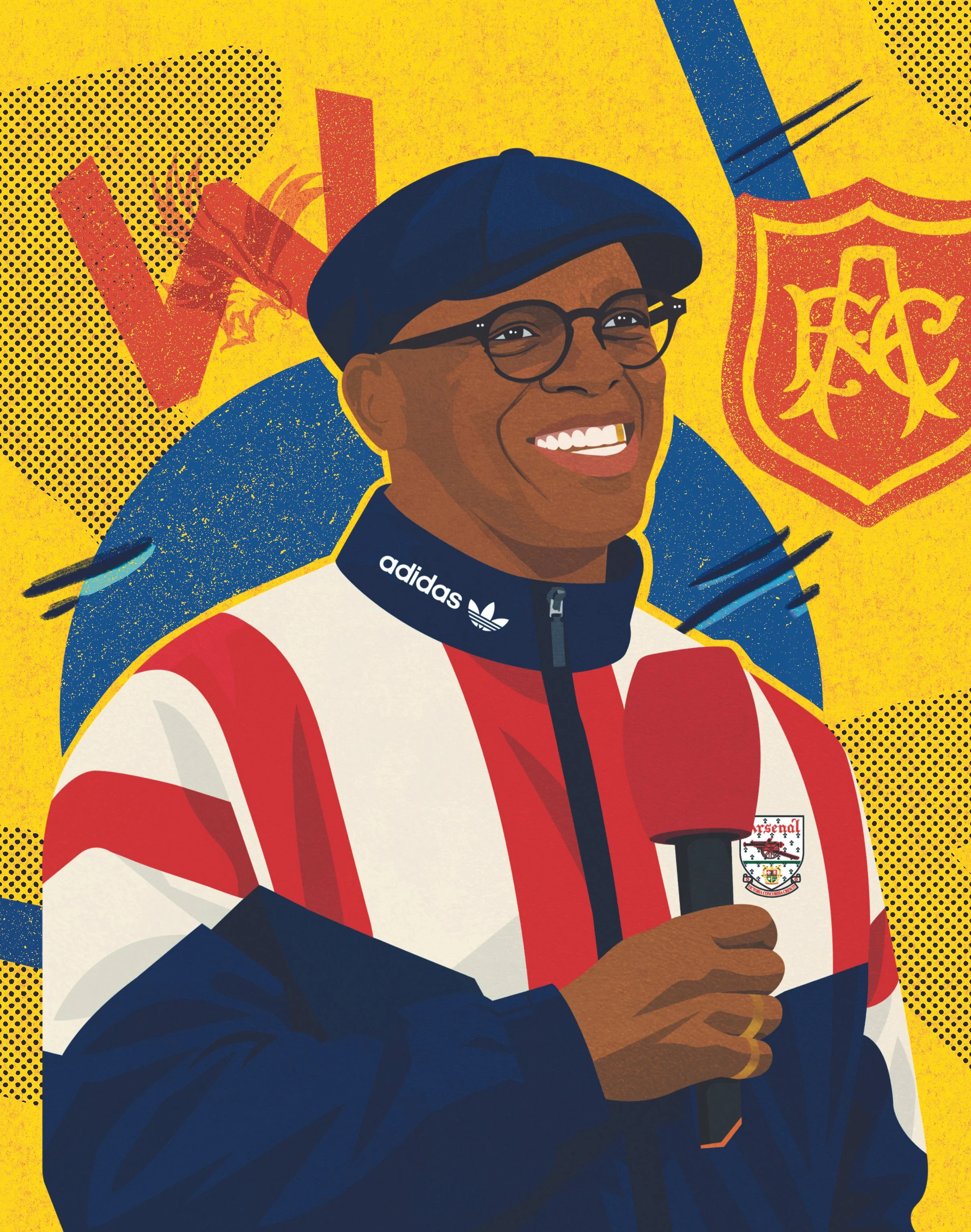
A life after football, every bit as inspirational as his career in it. But what makes one of the game’s most infectious characters tick? And why, when he’s on our screens, does it all feel oh so Wright?
“I like a good cry. Takes a man to admit that, I think,” Ian Wright wrote in a first-person essay for The Players’ Tribune in 2018.
On the surface, it’s an unexpectedly revealing introduction to one of football’s most recognisable faces and guileless smiles. Nearly a decade ago, such openness about a person’s emotions was less commonplace than it is today. But it’s hardly surprising from the former Match of the Day presenter, column-writer, co-host of The Overlap and later-life fashionista. A refreshingly honest character, and an indefatigable optimist, the 62-year-old (is he really that old?) has built more than one career on wearing his heart on his sleeve. And he’s not about to stop.
Wright is a man of the people, for the people, and seemingly comfortable among them – the people, that is. The former Arsenal front-man is funny, warm, enthusiastic, emotionally open and unafraid to show affection. He is also a serious football thinker, an accomplished broadcaster, and an equally provocative communicator in holding ‘the game’ to account, as he is praising those at the top of it. He’s also an unashamed celebrant of the women’s game. In all forms.
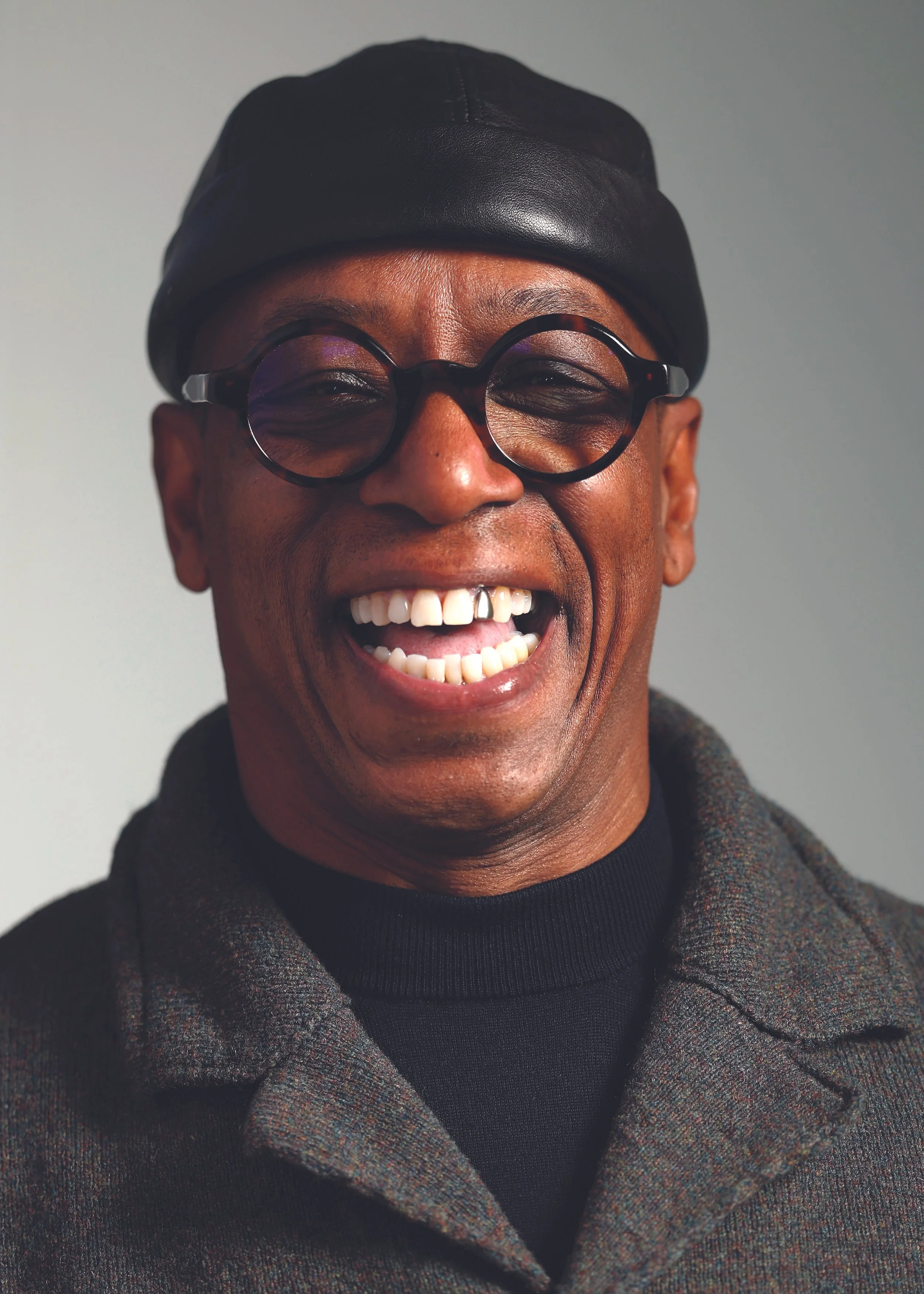
Whether wheeling away after netting one of 239 career goals or singing along to AC/DC, Ezra Collective, and Tina Turner on Instagram (if you’ve not yet watched those and fancy brightening your day, please do), it is that infectious smile that – to paraphrase Will Ferrell in 2007 comedy Blades of Glory – gets the people going.
But that projected happiness, Wright explained in the Players Tribune article, has not always come quite so easily. “It's been hard to get this smile,” he writes, “I earned it.”
In acknowledging as much, the often-self-deprecating Wright offered something hard to come by in the increasingly saturated world of football punditry: proof that, for all his spotlighting of others, he is not bullet-proof. Or, ironically, always right. But is all the more relatable for it. In his own words, he is “a decent bloke who just wanted to win for my team”, whoever that happens to be: Greenwich Borough, Crystal Palace, Arsenal, England, the BBC or, most recently, good friend Gary Neville.
“I’d say the last six years have probably been the most successful years of my retirement,” Wright told GQ, having walked away from Match of the Day in 2024. “Genuinely excited by fashion”, the interview itself represents a chunk of that success, at the preface of it.
He points to his 2020 appearance on Radio 4’s Desert Island Discs as a real turning point: it helped him grow as a person, and introduced him to a far wider audience than the football crowd. “Wherever I go and whatever situation I find myself in, from paupers to kings, people have heard it,” he says. “I remember I got a message from Russell Crowe saying it was one of the best episodes he’s ever heard.”
For further celebrity, Rob Beckett, the comedian and Arsenal supporter, describes ‘the Ian Wright Effect’ more relatable than anyone. “I'm an Ian Wright fan first and an Arsenal fan second. He is more than you can ever imagine.”
To help understand exactly why that might be, it helps to go back to South London, long before the gold tooth and the berets and beanies. Much like his beloved Gunners, Wright was born in Woolwich in 1963 and grew up in Brockley. Football was an obsession from an early age, a chance to develop his talents and find a sense of belonging amid an unsettled family life. But his, like many others’, was a less-than-straightforward route into the professional game.
This outwardly gentle man has been candid about the powerlessness he felt as a teenager and the anger that came with it. “For a large part of my life, I was angry. I was always angry,” he writes. In part because he was bullied by his stepfather, “a weed-smoking, gambling, coming-home-late kind of guy,” said Wright. One of the things that got to the football-mad striker the most was being forced to stand and face away when Match of the Day came on the family TV set. A programme he would later present for 27 years.
Yet, as though past struggles have opened his eyes toward those out to help him, Wright is as quick to praise others as anyone. After an unsuccessful six-week trial at Brighton, so short of cash that he struggled to pay for the journey home, he still heralds captain Steve Foster for helping him out financially. Speaking to The Overlap’s 3.7 million-strong audience, he recalled, “I remember saying thank you to Steve, getting a bus to the station, getting on the train – and then bursting into tears. The feeling of helplessness I felt in those five hours will stay with me forever. It was about a lot more than football.”
“What I’ve learned about the FA Cup is what it means to these lower league teams. It’s the blood coursing through their veins”
Saturday afternoons at The Den were too. “My experience watching Millwall kind of made me impervious to anything fans can do,” Wright has said of the experience. “Because everybody was scared of Millwall and what they were about. But these were people that I came from. I almost felt I’d been raised by wolves. Like I was Mowgli – because I wasn’t afraid of them.
“It was tribal,” he recalls. “Probably like joining a gang, [although] it wasn’t any badness; we wasn’t fighting or anything. We was just tagging along. But when I was in there, I was one of the lads and I felt like I was part of something. For the first time”
A well-told tale, the professional game remained out of reach until Crystal Palace, then playing in the Second Division, came calling in 1985. Manager Steve Coppell had developed a network of non-league contacts, allowing the former Manchester United winger to look beyond familiar scouting routes. Wright was playing for Greenwich Borough when the professionals of South London took an interest. He was 21, working outside football, and – according to him – had endured “nearly 11 years of rejection, bullying, prison (for failing to pay fines) and all sorts of nonsense” before finally getting his dream.
There was no hefty transfer fee hanging over Wright’s head when he joined the Eagles in August 1985. He was earning £30 a week at Greenwich and after a handful of matches, an opposing manager – not wanting to be on the receiving end of his talents – tipped off scout Peter Prentice, who gave him a trial. It wasn’t much of a risk. The price for Wright’s services was, reportedly, a set of weights. Six and a bit seasons, and 118 goals later, having taken Coppell’s side to the top-flight, he would go on to be sold to Arsenal for £2.5m.
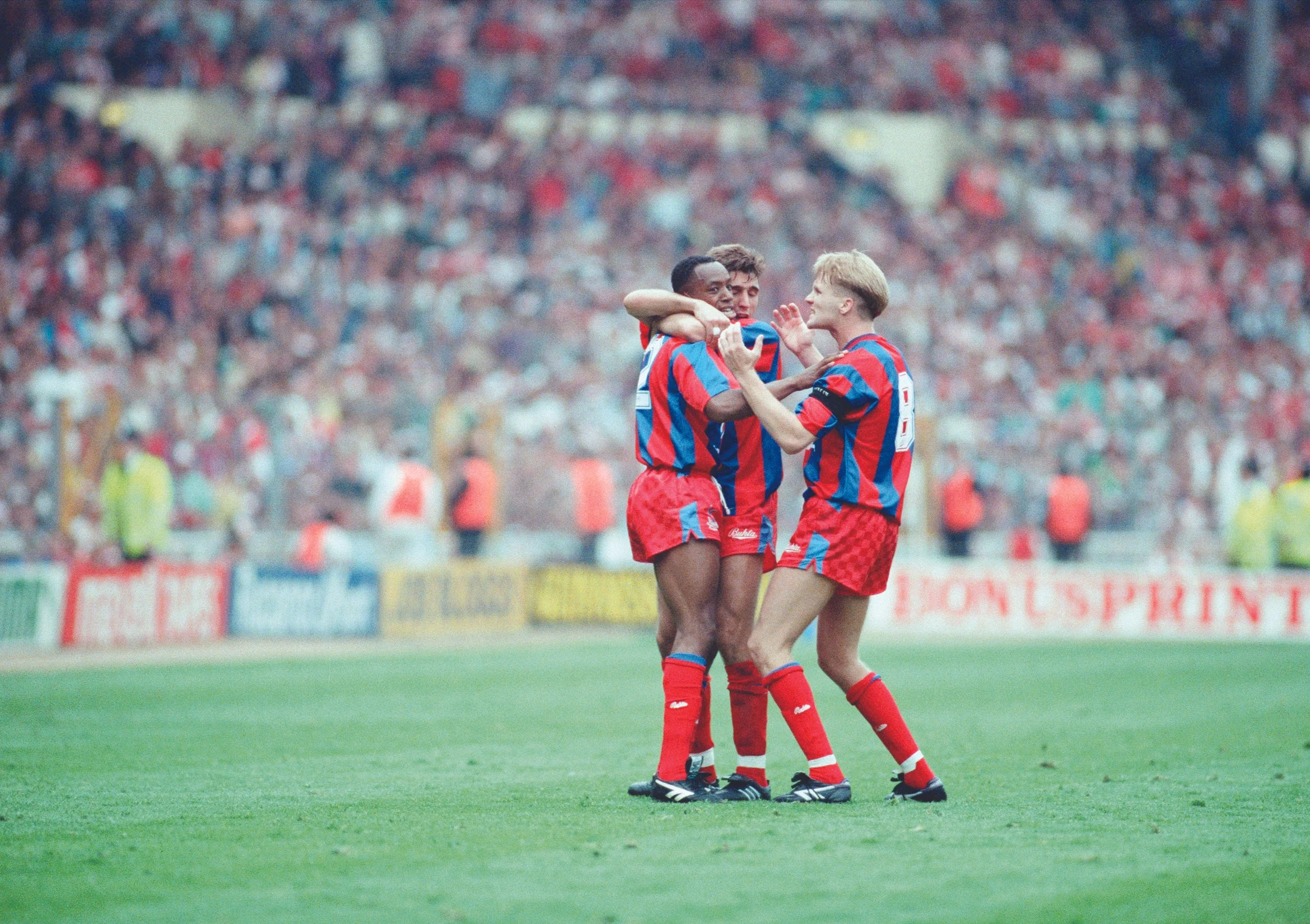
With Palace – as if determined to make up for lost time – the then-22-year-old scored nine goals in his first season in professional football. Although he later acquired a reputation among his strike partners for being hard to handle, he developed a great rapport with Mark Bright: in 1989/90, he scored 24 goals – while his colleague grabbed 20 – as the Eagles returned to the first tier of English football via the play-offs. Which is when Mr Wright became nationally famous after his ‘super-sub’ performance in the 1990 FA Cup final. A fitting moment, for a player whose rise was about to become a microcosm of the cup itself.
Equalising against Manchester United to force extra-time and then putting his side ahead. As if to spoil this otherwise perfect tale, the final finished 3-3 and Palace lost the replay 1-0. Wright has never played down what those few minutes meant. “It’s still the greatest moment I’ve had in my career – easily,” he told Crystal Palace on the eve of their Cup-affirming Wembley final in 2025. “I’d broken my leg – my fibula – twice that season.” Having only just fought his way back into contention, coming off the bench, the then-26-year-old scored twice, and for a brief spell Palace were seven minutes from a first major trophy. “I would have loved to have won that Cup, and we were only seven minutes away... Seven minutes! Honestly, I still can’t take it!
“When I grew up, the FA Cup Final was the game that I watched religiously from 1970, all the way through,” he said. “There was that beautiful FA Cup story right there, and I’m thinking (perhaps too early): ‘oh my gosh, we’ve done it.’”
The next season, he scored 15 league goals, including an 18-minute hat-trick against Wimbledon, as the Eagles soared to their highest ever league position: third in the old First Division. And, by all accounts, loved doing it: “I just could not score enough goals, could not get enough of that feeling – it was like a drug.”
An instinctive finisher, Wright could – and did – score any type of goal and from almost anywhere on the pitch. In Sunday League games, he didn’t need to consider movement off the ball because he was so quick. Later, he worked hard on this part of his game, often testing defenders by running up to them and pretending to make a run: “If he goes with me, even when the ball’s not in play, that’s when I know he’s afraid. I would hit the post in games on purpose because I was bored. I didn’t want to be playing against people stubbing out fag-butts or finishing pints at half-time.”
Reflecting on his recruitment policy in September 2026, manager Coppell explained that “Ian Wright was a no-brainer”. The players he wanted were those with something to prove. “All the non-league players had an 'I'll-show-them' mentality”.
That determination, it feels, was – and still is – central to Wright's rise, and consistent with his work ethic to graft it out. He had spent too long outside the door to waste any opportunity once it cracked ajar.
Combining the ability of a Premier League great with the exhilaration of a Sunday league player, a real ‘one of us’, Wright brought a kind of beautiful chaos to the forward lines of Palace and Arsenal. He once summed up his philosophy as a striker in five words: “Never give them a break.” And, until injuries caught up with him – he retired, aged 37, in the summer of 2000 – he was as good as his word.
In amongst all that were 185 goals for Arsenal – their second-top scorer behind Thierry Henry – nine for England, a Premier League win in 1997, and two FA Cups to boot. It is that latter competition that feels most appropriate to map the career of Wright onto – having experienced all corners of the football league.
“What I’ve learned about the FA Cup is what it means to these lower league teams,” said Wright. “It’s the blood coursing through their veins; they need it more than anything else. When you see a team finally get to the third round, and they are in there with the big boys, we just see this fairy tale story.
“But the journey they’ve taken to get there is unbelievable. The people who support these lower-league teams are the lifeblood of the game, and I’m very proud to have any links with The FA Cup.”
And perhaps that is the point. Wright understands the value of being given a chance, of finding your people and of helping the next person along.
That, he certainly discovered in Arsenal’s recent regeneration, celebrating with the fans, as a fan, after their first Premier League title since 2004. When the long wait ended in May 2026, Wright headed straight for the Emirates to join the party. “I was absolutely over the moon,” he said. “It’s amazing, honestly, and this club deserves it. Our fans deserve it all, around the world and everybody. We deserve this, man.” It was Wright in his element: standing in the middle of it. Getting stuck in.
Ever the entertainer, and now a grandfather of eight, he has never seemed more himself, or been listened to more closely. “Why I’m getting the love and everything now,” he believes, “is because people have actually seen that I’ve stayed true to who I am and who I was.