

Game Of Zones
Game Of Zones
In this extract from Andres Martinez’s book ‘The Great Game’, he explores a tale of two footballs and America’s quest to conquer global sport. The NFL’s plans for worldwide expansion.
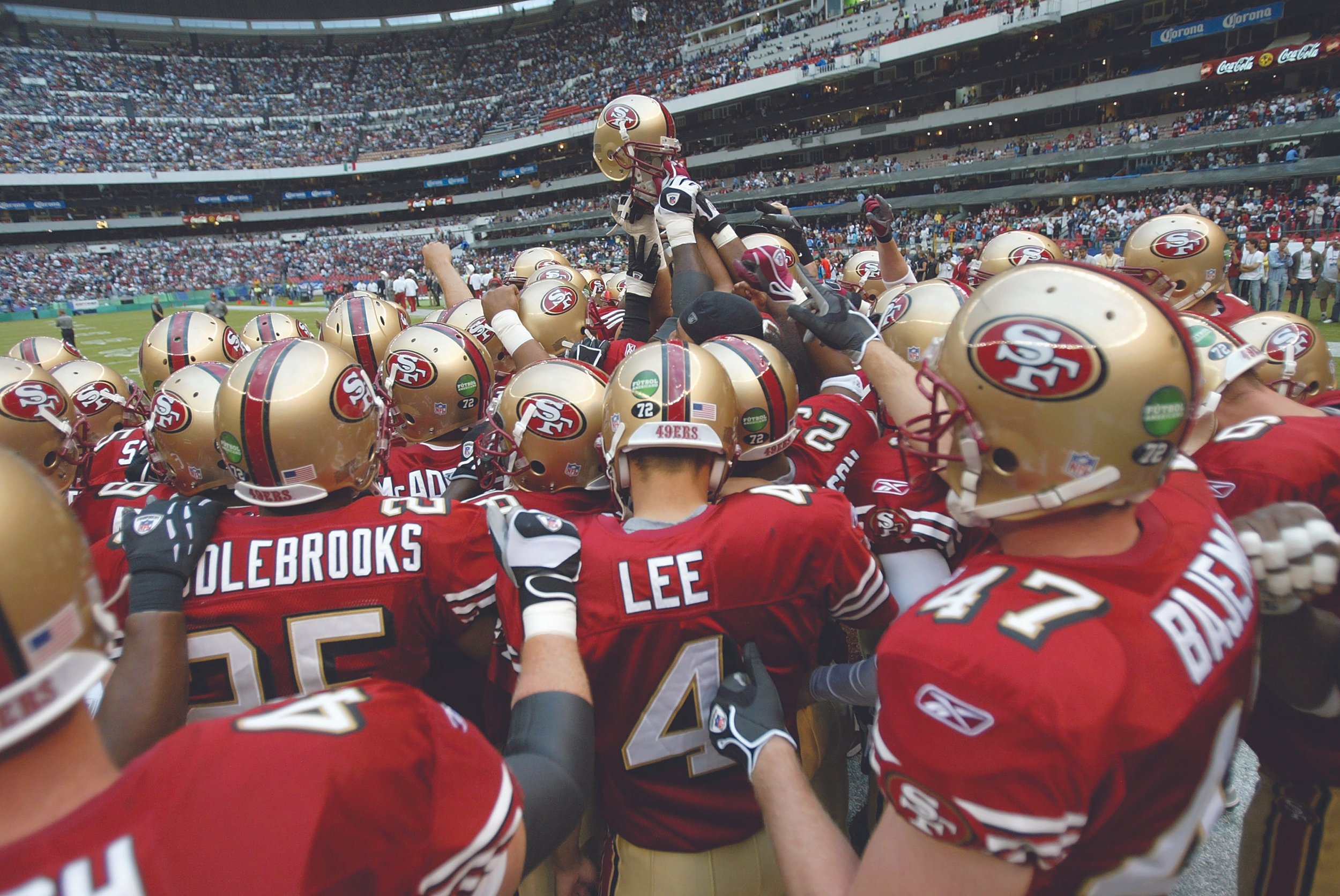
The NFL’s immense popularity in Mexico can be ascribed to proximity and to our two neighbouring nations’ overlapping, shared cultures. American football was first brought back to the Universidad Nacional Autónoma de Mexico by a couple of Notre Dame grads eager for their UNAM’s Pumas to play in blue and gold (which they do, to this day, in both footballs) as far back as the 1920s. The NFL’s popularity then spread across Mexico in the 1970s thanks to television, long before the NFL had much of an international strategy. The top spectator sport in the United States was always going to have a spillover fanbase in Mexico.
But the scale and profitability of that fanbase, coupled with the success of the NFL’s games in London over time, have encouraged the league to think globally and grow the game beyond America’s shores. The NFL has been more successful than any other sports venture anywhere at monetising its fans, but it has been slower than many other sports at crossing borders to gain adherents. Unlike such other American cultural blockbusters as a Marvel movie or a Taylor Swift concert, the Super Bowl is still watched by far more people within the United States than outside it.
Commissioner Roger Goodell is focused on changing that, focused on turning the NFL into a global game, and he is empowering some of the bolder franchises to do some of this international proselytising on their own. The league, which traditionally hasn’t allowed individual teams to market themselves beyond their hometowns, created a Global Markets Program that enables teams to pursue marketing deals in specified overseas markets. So, for instance, the Los Angeles Rams cannot buy a billboard promoting themselves in Las Vegas, or make a deal with a Vegas pizzeria to be the ‘official pizza of the Rams,’ but they can now do either of these things in Mexico City under their league-awarded Global Market rights for that country. Teams can choose what countries they want to treat as an extension of their home market. The league initially hoped to divvy up the world with no more than two or three teams claiming a particular country, but their tidy plan had to give way to the reality of many clubs wanting access to the Mexican market (you can now go to a number of Steeler-themed KFCs in Mexico City); the Bears, naturally, were eager to claim the UK.
Television, of course, remains the main gateway to overseas fans, and to expand the game’s reach to more and more foreign screens, Goodell is focused on bringing NFL games to more countries, viewing these overseas games (or ‘market missions’ as the Eagles’ Ron Jaworski called his memorable Mexican weekend) as the most effective trailer possible for all subsequent attractions. All NFL club owners pay lip service to this global aspiration, but plenty have baulked at sacrificing one of their precious few home games to go proselytise overseas for the league. For years it tended to be the less storied franchises going through rough patches or struggling to sell out their stadiums that were most willing to sign up for international duty.

“The league hoped to divvy up the world with no more than two or three teams claiming a particular country.”
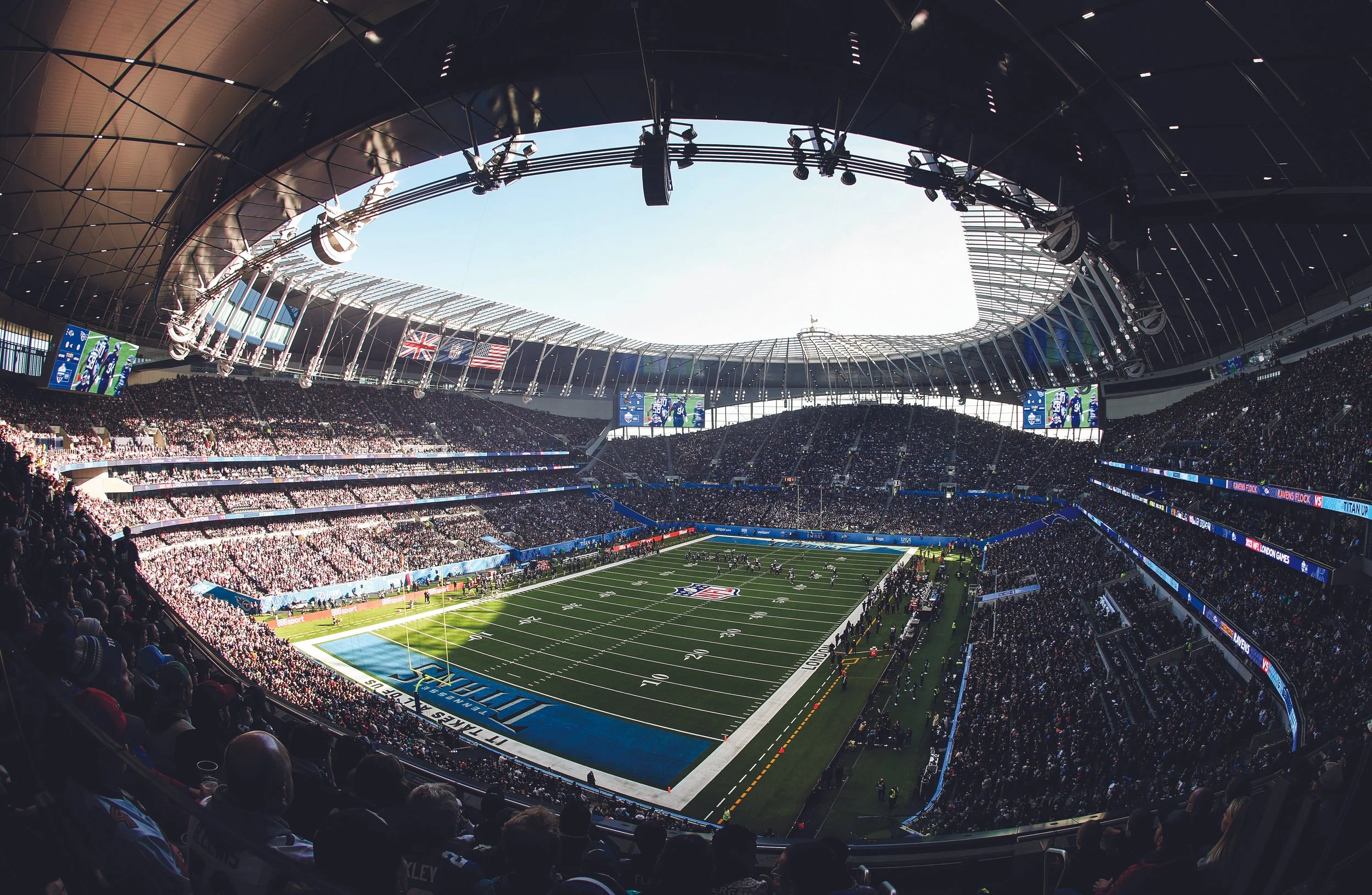
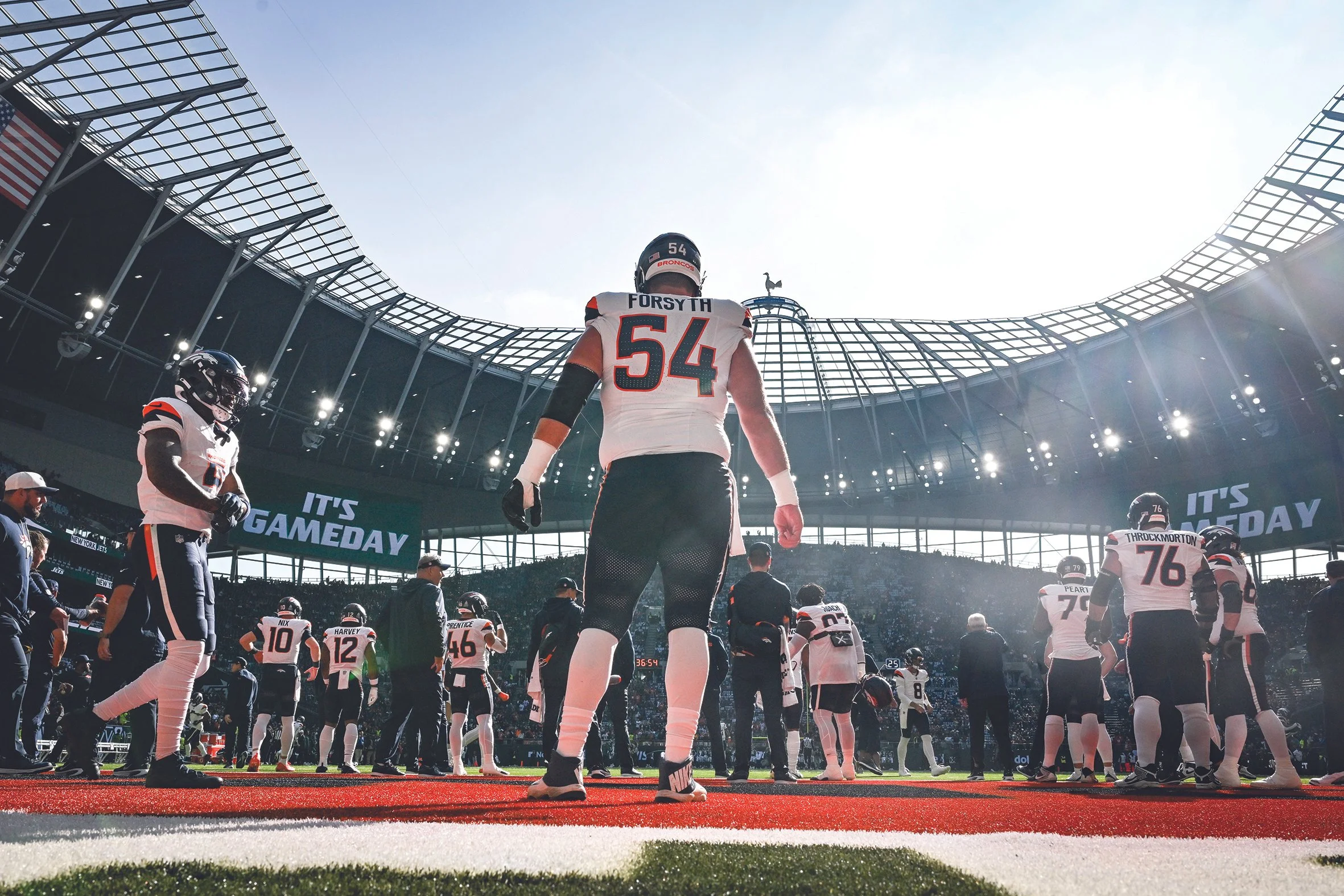
In 2021, Goodell managed to expand the long-established 16-game season to a 17-game regular season, to free up teams for more international duty. In its 2024 season, the NFL played its first-ever game in South America, in São Paulo, plus three games in London and one in Munich (it skipped Mexico as the Estadio Azteca in Mexico City was being refurbished for the men’s 2026 FIFA World Cup). In 2025, the number of international games ticked up to seven, including the Steelers facing off against the Minnesota Vikings in the first regular season game ever played in Dublin (Steelers owner Dan Rooney had been President Obama’s ambassador there). The Chiefs played the Chargers in the second annual São Paulo game, and in addition to the customary three games in London, the league also played its first game ever in Berlin’s historic Olympic Stadium and in one of the other football’s most sacred grounds, Real Madrid’s Santiago Bernabeu Stadium, which to those of us of a certain age feels a bit as if a visiting Protestant congregation took over St. Peter’s Basilica in Vatican City for the day. And Melbourne, Australia, has been announced as an NFL debutante in 2026. Goodell is pushing for an 18-game regular season, featuring 16 international matchups each year, and he has refused to rule out the possibility of a Super Bowl being played overseas in the foreseeable future.
It’s worth noting that the English Premier League, the most globalised domestic sporting league anywhere, lacks such an ambitiously peripatetic plan. Years ago, Richard Scudamore, the league’s chief executive then, floated the idea of a “39th game” (the 20-team league currently is set up where each team plays each other twice in a season, at home and away) to be played abroad, but the fans wouldn’t have it – never mind how globalised the league is. The Football Supporters’ Federation, a nonprofit representing British fans, mobilised against what they termed “the outrageous desecration of our national game.” To this day, fans of clubs like Manchester United and Liverpool in the United States or in East Asia only get to see their teams in person on one of their frequent preseason summer tours or by travelling to the source.
To further highlight the NFL’s internationalisation, Goodell introduced a novelty for the 2024 season – a primetime, Friday night international game on opening weekend, sandwiched between what has become the traditional opening game hosted on Thursday night by the defending Super Bowl champion and the league’s first Sunday slate of games. A federal law bars the league (in exchange for permission to negotiate their TV rights as a collective without running afoul of antitrust law) from playing on Fridays or Saturdays from mid-September through early December to protect high school and collegiate football attendance, but the NFL scheduling masters saw an opening to squeeze this one in before that blackout period and extend its opening weekend.
The first of these Friday night international games was awarded to the massive metropolis of São Paulo, Brazil, much to the delight of the city’s tourism authorities who’d been lobbying the league to come down. And the NFL picked a marquee matchup for the occasion: the Philadelphia Eagles against the Green Bay Packers.
Brazil has long loomed large at the NFL’s Park Avenue HQ in New York City. A massive, sports-mad country with a population of more than 210 million and an expanding middle class eager to absorb American culture, Brazil already is home to an estimated 40 million self-professed NFL fans. The game has been on ESPN Brasil since 1991, and in more recent years there has been an explosion of Portuguese-language websites, publications, and social media influencers devoted to following the league.
Brazil, in other words, looks to the NFL very much like its next Mexico.
If Mexico was claimed early by the Steelers and Cowboys, the Packers have vied with the New England Patriots to be the most popular team in Brazil. The Patriots might be slipping, though, with the end of the prolonged Tom Brady-Bill Belichick dominance and of the Tom Brady-Gisele Bündchen marriage.
As for Green Bay, its appeal in Brazil tracks why it is many Americans’ second team. The Packers are one of the NFL’s more storied franchises, tracing their history back to 1919, when founder Curly Lambeau convinced his meat-packing employer (the Indian Packing Company) to pay for the team’s jerseys. Representing the NFL’s smallest market (and doing so competitively, thanks to the league’s ‘Socialism in One Country’), the Packers are a throwback to the types of communities that gave birth to professional American football – Canton, Decatur, Muncie, Akron, and so on. Even back in the 1960s, when the Vince Lombardi-led Packers won five titles, the team was already seen as the league’s throwback, nostalgia franchise, championing bygone values and tradition in an era of fast-changing mores. As David Maraniss described it in his biography of Vince Lombardi, When Pride Still Mattered: “Green Bay was susceptible to appeals from the past, especially from Lambeau. It was an inward-looking town whose culture was rooted in the rituals of church, family, neighbourhood tavern and the Green Bay Packers.”
For today’s Brazilian fans, another attraction is the fact that the Packers wear Brazil’s national colours.
Then there’s the team’s unique ownership structure. Mark Murphy, the president and CEO of the Packers who will retire in the summer of 2025, said before the trip down to Brazil that he assumed the team owes much of its popularity there to “our structure, you know that we’re owned by the community, that we don’t have a wealthy owner,” but rather 550,000 shareholders. “Our main goal, number one goal,” he continued, recording one of our Great Game Lab Set Piece conversations, “is to win championships, and number two is to make sure we stay in Green Bay.”

“The packers are a throwback to the types of communities that gave birth to professional American football.”
Murphy applauded the league’s aim of making the game a “global property,” and said the push wasn’t without opportunities for personal growth for him, as well as his players. He said everyone involved with the team had a fantastic experience when the Packers played in London in 2022. And he was looking forward to going to São Paulo: “I have never been to South America, and I’m a 69-year-old man.”
As for his younger players, many of them arrived at training camp without a passport, well before it was clear which of them would survive the roster cuts to ultimately be on that 11-hour flight to São Paulo. Murphy ensured that all players going through training camp would end up leaving it with a passport, regardless of whether they made the team.
Murphy has also been impressed by the flip side of sporting globalisation – the other football’s inroads into the US market. He marvelled at the sell-out crowd of 78,128 that turned out in Green Bay to watch an exhibition game between Manchester City and Bayern Munich in the summer of 2022, adding that “it seemed a little odd seeing soccer played inside Lambeau Field, but people loved it.” Murphy was also surprised to discover how excited his own players were for that game, and how much they knew about the visiting football clubs and their players.
As for the Philadelphia Eagles, they still don’t travel well.
In advance of the team’s trip to São Paulo, Philadelphia’s cornerback Darius Slay said on his podcast that he was looking forward to the start of a new season, “but, man, I do not want to go to Brazil,” adding that he didn’t understand why the NFL would “want to send us somewhere with a crime rate this high.” Never mind that São Paulo’s murder rate was considerably lower than Philadelphia’s; Slay and other players were reacting to cautionary league instructions to avoid leaving their hotels unaccompanied.
Several Brazilian reporters raised these comments at an Eagles press conference held at São Paulo’s Neo Química Stadium that I attended on the eve of the Friday night game. Coach Nick Sirianni and his players who spoke deployed a charm offensive, expressing their gratitude for being able to represent their sport abroad and for the warm embrace of Brazilian fans. Sirianni also talked about the significance of NFL players getting a rare opportunity to play before the “Friday night lights,” as they once did in high school.
Quarterback Jalen Hurts expressed amazement that he, “a kid from East Houston,” could now serve as an ambassador for his sport. Running back Saquon Barkley, the team’s big offseason signing from the rival New York Giants, ingratiated himself with the hosts by unveiling a Brazil national team soccer jersey with his name and the number 10 on it.
But the player who acknowledged some of their teammates’ smears against Brazil, and did the most damage control around them, was Tanner McKee, the team’s third-string quarterback, who asked if he could speak directly in Portuguese, much to the surprised delight of the assembled reporters. People “are a little afraid of things they don’t know,” McKee said. “We’re in a country where many of them haven’t been, they don’t speak the language, they don’t know anything about Brazil.”
McKee, who played at Stanford, had spent two years in Curitiba, Brazil, as a Mormon missionary. He assured us that most of his teammates had been very excited about the prospect of travelling to Brazil, wanted to learn more about the local culture, and were enjoying the trip. Unfortunately for the NFL’s PR folks, McKee would spend the actual game on the bench, behind Hurts, but he still should have won an MVP award from Roger Goodell for his media appearance.
The NFL can’t be blamed for the trope of the “ugly American” overseas, which has more to do with spoiled American tourists wanting everything to be just as it is back home than it has to do with young players who often come from underprivileged backgrounds suddenly being asked to engage in globe-trotting sports diplomacy. But the league’s dire warnings to players to avoid engaging with their surroundings when travelling to Brazil (or Mexico in other years), however prudent from a risk-mitigation standpoint, risked insulting the very fans being wooed with these international games.
I had flown down to São Paulo to witness the NFL’s historic first game ever in South America and purposefully stayed with a contingent of travelling Packers fans at the Meliá Hotel near the border of the trendy Itaim Bibi and Jardim Europa neighbourhoods. The hotel is surrounded by smart bistros (including the festive Vaca Vieja, or ‘Old Cow’ steak place, which travelling Packers fans would colonise by week’s end) and equally smart apartment buildings. Just a few blocks away, across the Avenida 9 de Julho (which I was told celebrates a failed attempt by the state of São Paulo to secede from Brazil in the 1930s), the high-rises gave way to a leafy neighbourhood of mansions that you might need to be on a big NFL contract to afford. The hotel staff wore Packer jerseys and had redecorated the place; the elevator doors featured life-sized Packer stars for the occasion.
You could fit 213 Green Bays into the massive sprawl of São Paulo, a relatively young, gritty metropolis built on the wealth of 19th-century coffee trading and 20th-century industrialisation. São Paulo prides itself on its reputation for being a serious, unglamorous, hardworking place, content to leave all the stereotypes foreigners might associate with Brazil – think hedonistic samba-dancing beach culture – to Rio de Janeiro, its great rival, and that city’s so-called Carioca residents.
This is an edited extract from The Great Game: A Tale of Two Footballs and America's Quest to Conquer Global Sport (Bloomsbury) by Andrés Martinez.
Andrés Martinez is co-director of the Great Game Lab at Arizona State University. He has been a business reporter, editorial writer, and editor at the Pittsburgh Post-Gazette, Wall Street Journal, Los Angeles Times, and the New York Times, where he was a Pulitzer Prize finalist for a series of editorials on global trade. He has also written extensively on sport and globalisation for the Los Angeles Times, Slate, Time, Reuters, the Washington Post, and Reforma.