

One in a Million
With its strict invitation-only policy, The Masters is the ultimate insiders’ tournament. Peering through the pines, Pitch turns to someone who has actually walked the fairways to explain what it is that makes Augusta, Augusta – and The Masters, The Masters.
WORDS: KIERAN LONGWORTH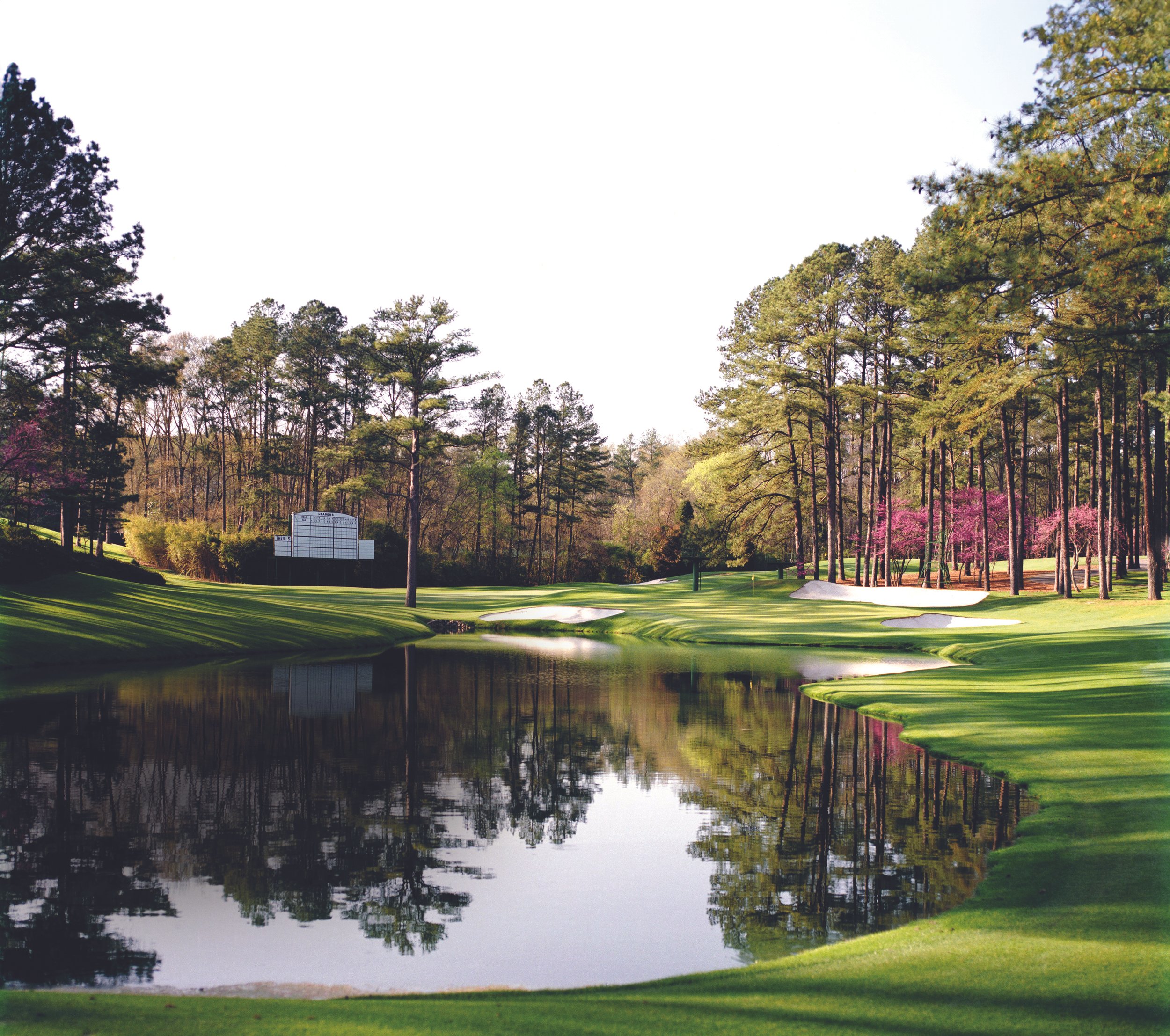
By our back-of-the-envelope calculations, roughly 3,000 people can call themselves lucky enough to have played at Augusta during Masters week in its 90-year history. Many have vied for the green jacket, and 56 have been successful enough to wear it. With the tournament’s entry policies – its field is made up of those who earned a top-four major finish, winners of PGA Tour events, those ‘residing’ in the world’s top 50, and past champions – there are between 80 and 90 competitors each year, and on average around 20 debutants.
The Masters does a lot right. As far as major events go, Augusta offers relatively cheap concessions (around $130 all-in for a day in 2026), perfectly manicured fairways, and consistently entertaining golf. That’s not to mention the famous pimento cheese sandwiches, and the ‘no tech’ policy keeping those present firmly ‘in the moment’. But one of its crowning touches has to be the invitation extended each year to 28 randomly selected members of the media, who get to play the course. It’s one of the coolest perks in the business. That is, if you happen to win the lottery. Like Eamonn Gavigan did in 1998.
The lucky souls head out in seven fourballs, playing to the same Sunday pin positions that were in use a day earlier. “As a participant,” Gavigan begins, “it’s the most memorable round of my life. Even now, the hairs are standing up on the back of my neck thinking about it.”
“it’s the most memorable round of my life. Even now, the hairs are standing up on the back of my neck thinking about it.”
Born in Bundoran, County Donegal, in 1947, Gavigan grew up with a course in his back yard, earning his stripes as a caddie for the likes of Ryder Cup player Christy O’Connor, the local professional. “He was magnificent, one of the best in the world at the time,” the 79-year-old offers. “I caddied for him at the British Masters too. He was a Ryder Cup player and, interestingly, the first person to win both a four-figure and a five-figure monetary prize in golf. Bundoran was a big holiday place for golfers then. Like Lahinch without the sand. Beautiful.”
Working for the Nottingham Post, Gavigan trained as a journalist covering rugby, horse racing and eventually his favourite sport, golf. And a few years along the line, the luck of the Irish kicked in, big-style. It was a massive break for him that the newspaper had an editor who was passionate about golf and also, that a born & bred Nottinghamshire lad was threatening to win The Masters.
Gavigan would travel to Georgia to follow the progress of a young Lee Westwood, then 25 years old and looking the real deal.
As an aside, Gavigan references David Leadbetter as the coach who took Westwood to the top. “He was more forthcoming than everyone I had ever interviewed,” he adds. “I asked him why he was coaching Lee, to which he said: ‘I want to take him to number one,’ and he did, in 2010. It was only for six or eight weeks, but he got him there. Leadbetter was one of the nicest blokes, and effectively the original coach before Butch Harmon et al. He of course called me back when Westwood got to world number one. A ‘told you so’ moment, I think.
“Back to 1997, I remember when Lee Westwood first came into the office in Nottingham with his letter of invitation. You can only get into Augusta with a letter – patrons, media, everyone. He went that year and finished tied 24th. That was when Tiger Woods, himself only 21, won it for the first time. In fact, of the nine years I went to Augusta, I saw the green jacket hoisted over his Sunday-red top three times.
“Lee made the cut and finished 44th on my first visit. As eye-opening as it was to see Augusta National – and America – for the first time in ’98, I was even more flabbergasted to get to play. It was surreal to be faced with the same shots I’d seen hundreds of times on TV.”
If covering the tournament had already felt like entry into another world, playing it was something else entirely. “We were told to show up an hour before our tee time, and the complete Augusta National experience was offered,” Gavigan says. That journey starts with the drive down Magnolia Lane, past the logo of yellow pansies in Founders Circle. “You’re assigned a spot in the Champions Locker Room,” he continues, still in disbelief some 27 years on. “Eventually you are introduced to a line of caddies in their trademark white jumpsuits. My caddie’s name was Moses – honestly! You can’t make it up.
“Luckily, I had my clubs. It was only at the last minute that I had decided to take them to America. I had no proper bag, so I’d wrapped them in bin liners to get through the airport. Nothing was broken, amazingly.
“For one week every April, golf takes over like you wouldn’t believe. And where it has been quite racist in that area through the years, during Masters week I like to think it’s different. You’ve got 50,000 people there every day. The entire population normally isn’t that high.
“I had booked through Andrew ‘Chubby’ Chandler – he was Lee’s agent, and one of the best in the world. If I remember correctly, I stayed with a couple – Manley was the name. I still remember walking over to my host’s truck and on the front read a big sign: ‘Jesus Saves.’ He was a preacher. They had a house near Augusta and unbeknownst to me, Sandy Lyle was in the house next door. A Masters Champion 10-years prior, no less. That was the first time I’d ever been to America. Everything was… different.”
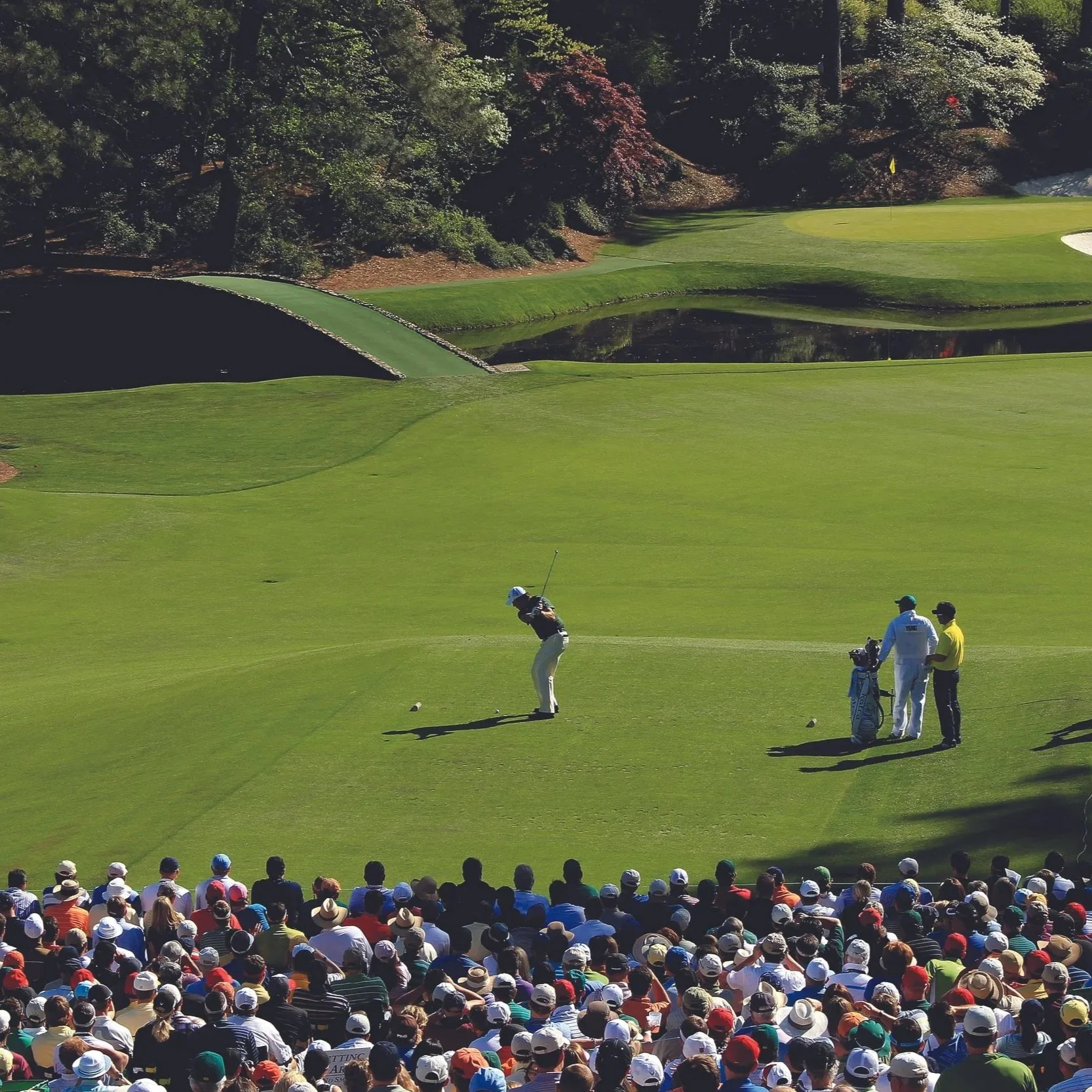
But it was the golf itself – the playing of it rather than the reporting on it – that sharpened the memory. “I’ve still got my letter of invitation and the scorecard too,” the once-scratch golfer says proudly. The small, white card he presents is a wonderfully succinct statement of the club’s less-is-more philosophy. Far from your average scorecard, it doesn’t contain the course rating and slope – but then, there aren’t any. Hole handicaps are based on length, so the 145-yard 12th is rated as the 16th hardest hole, which is clearly not the case.
The course has changed a bit since then, notably the lengthened 11th, in the country club’s continued efforts to ‘Tiger Proof’ itself after Woods won by 12 shots in 1997.
“I did alright around Amen Corner, I got a five on the 10th, four on the 11th, four on the 12th. I had a couple of blows – a seven on the 2nd and a seven on the 15th. But the rest was steady enough,” Gavigan says. It amounts to an all too humble aside from one of golf’s lifers. A round of 82, all things considered, was more than respectable. And would have bettered a select few qualifiers over the week’s play. But numbers, the Bundoran native insists, only tell part of the tale.
“We were a three-ball. And with this story now becoming even more unbelievable, there was a Swedish fella I played with who had never played a full round before. He’d been to the range, obviously, but struggled around the greens.
“In that sense, the course is such a challenge. It was like nothing I had ever played. It’s wide open off the tee, but when you get down to where it matters there are so many contours – the ball can roll anywhere. They say from the 1st tee to the 11th green there’s about a 32-storey drop. It’s all downhill. And very, very hilly. I don’t think that comes across on TV. At least, back then it didn’t.
“Even the 18th – you look at it and think it’s pretty level, but there’s quite an incline up to the green. You’d probably get two or three ‘British’ fairways into one at Augusta. and the greens are like lightning. They weren’t cut before our round, but they still had to be close to tournament-ready. One of the best things about playing that day of all days was that the course was immaculate. The famous azaleas were out in full force, with the pin placements in their same Sunday location. It felt like putting on glass. And like you were playing in The Masters proper.
“I think that’s partly what makes Augusta so extraordinary. You cannot compare it to any other event in sport. It’s the only major that’s at the same course every year but even though you might know what’s coming next, it can haunt you. There really is no place to hide.
“As a writer – faxing my copy in, as it was then – it was a joy because you can follow the story and remember what certain players did in years gone by. I imagine it can hold players in that sense if they’ve had a ‘mare’ on a particular hole. It can get you. Even if you think about Jordan Spieth – a fantastic golfer and green jacket-wearer in 2015 – he blew it the year after. It’s taken some names. Luckily for me,” he jokes, “I only played it once.
“It can be quite a windy place too. Where hitting it high works at most regular Tour events, going above the trees at Augusta is a kiss of death. And you see pros falling out with their caddies all too often. Westwood fell out with his caddie, Nick Doran, one year. Players often look bemused as to why balls come up short or over the back of greens, and it’s because the wind is almost undetectable at ground level.
“The other side of that coin is that two of the greatest shots I’ve ever seen on a golf course happened at Augusta. One was Phil Mickelson and the other Bubba Watson. Both left-handers, the course suits a left-handed fade – or right-handed draw in Danny Willett’s case. Bubba was in the trees on the right of the 10th, Camellia – a dogleg left. Mickelson was the same on 13, while playing with Westwood in 2010.
“To take that shot on, reaching the green in two, when a tributary from Rae’s Creek is guarding the surface was either brave or stupid – I can’t make my mind up. Where Westwood had to chip out, there was the genius and bravery required to win the green jacket on show, from one of the game’s great magicians in Mickelson. Two real turning points in the history of the tournament, and their two respective careers.”
Westwood finished second at The Masters in 2010, tied second in 2016 and tied third in 2012. However, as Gavigan recalls with a tinge of sadness, he never quite managed to get his name up in lights.
‘I can’t quite put my finger on why Lee never won a major. Chance is a fine thing in golf, but you make your own luck at Augusta.
“Well, the players do anyway. My name was pulled out of a hat.”