

Heavy is the Head
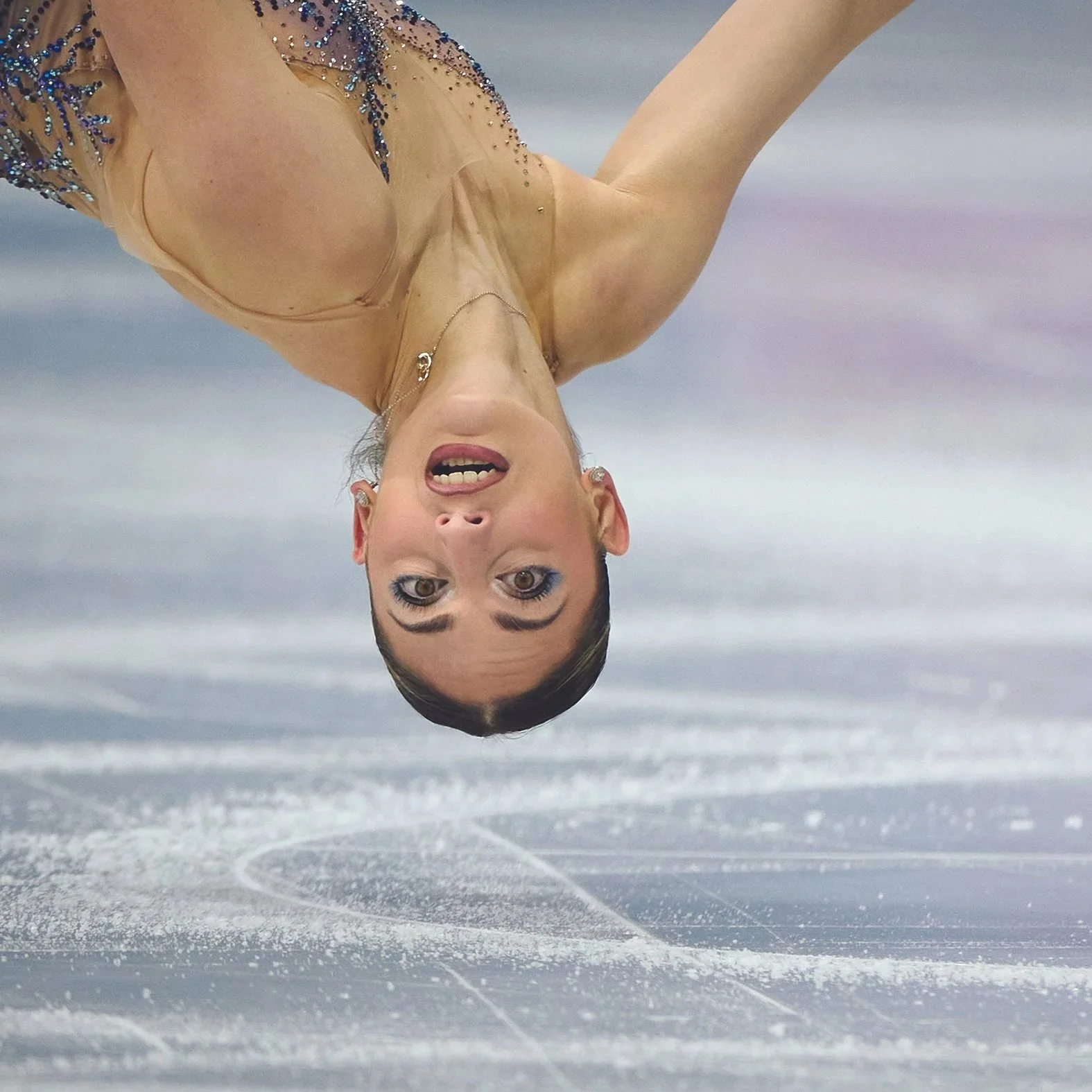
Is sport damaging athletes’ mental health and well-being?
Words by Rosalie Ingle, winner of the 14-15 age categoryLight and dark. The smiling American skater with a Winter Olympic gold medal around her neck, and the Russian with blood red hair and dark eyes. The ice becomes a stage where stories are put in motion, where every jump and spin feeds into a narrative the audience is so eager to believe. We were all enthralled watching Alyssa Liu winning the recent Olympic gold medal at Milano Cortina. Four years prior, Alexandra Trusova also made history by completing five quads at Beijing. But behind these performances comes intense pressure and a more nuanced picture.
We all know the benefits of exercise. Scientists have shown that even doing a workout as little as twice a week makes us healthier and leads to a longer life. But at an elite level, where Olympic gold medals and glory can be decided by fractions of a second, or judges looking at a microscopic edge, the situation can become more complex. The pressure on the athletes can drastically change the outcome of the competition with a miniscule variety of actual skill level.
Alyssa Liu responded to her gold medal as you’d expect, jumping up and down excitedly. However Trusova, despite winning a silver medal at the Beijing 2022 Olympics, was far less happy. She said afterwards “I hate this sport”, and later, “I won’t go on the ice again”. Even her compatriot, Anna Shcherbakova, who won gold ahead of her, was not entirely happy with her achievement, saying she felt only “emptiness”.
All sports have their own pressures, but arguably, in figure skating they are even more exacerbated. This is largely because the mean age of female figure skaters competing at an elite level is notably lower than in most other Olympic sports. It is widely recognised that adolescence - especially for girls - is marked by heightened insecurity and intense feelings, and yet in the world of figure skating comparison is normalised and embedded in the culture of the competition.
The pressure is reflected in research. In a Swedish study of competitive skaters, with an average age of just under 13, ~50% of figure skaters experienced strong signs of anxiety and/or depression. The expectation to fit into such a narrowly crafted ideal where stress is, frankly, unavoidable suggests negative mental health is not a side effect of the sport: but deeply intertwined with it.
Athletes must also navigate the ever harsh public scrutiny that has grown even more intense in the age of social media. Every mistake is magnified and broadcasted to millions of people - this dangerous culture of perfectionism teaches very young athletes to equate self worth with performance, which can only be negative. Social media not only amplifies criticism but also creates endless opportunities for comparison, as athletes scroll through their peers’ successes and only feel worse about themselves.
Coaching at this high of a level is famously dodgy, the line between teacher and student often becoming dangerous to navigate. At the same 2022 Olympics, another Russian, the 15- year-old Kamila Valieva, after a disastrous free skate, was immediately met with harsh questioning from her coach, Eteri Tutberidze, rather than being comforted. Even the IOC president Thomas Bach described this interaction as ‘chilling’ and suggested it indicated a lack of care for the child's mental state.
However, it would be incredibly oversimplistic to suggest that sport is inherently damaging to an athlete's mental health. Liu’s experience offers a healthier perspective. After previously stepping away from competitive skating, the American’s return to the sport clearly comes out of genuine excitement and passion - her coaches spoke about how they felt a change in her attitude, and how she seemed almost revived. Crucially, she said she had only come back because she was doing it on her own terms.
Her performances since have been memorable because of the sense of freedom in them - suggesting when this intense pressure is removed, sport can become a source of fulfillment rather than anxiety. This contrast perhaps suggests that it is not participation in the sport itself that is harmful: but the conditions in which it is pursued.
It is clear that the mental health of athletes cannot be understood by looking at the sport alone. Rather, it is shaped by the expectations and pressures surrounding them. The Olympic stage gives young athletes the potential to win big, but also reveals the cost behind a ‘flawless’ routine.
Ultimately, these stories challenge the audience to reconsider what elite sport truly values: is it the wellbeing of the athletes, or just the pursuit of achievement? At the end of the day, the golden halos and record-breaking jumps will continue to mask a harsher reality, where medals often come at an unseen cost.