

A Tale of Two Spot-kicks
How must it feel to know with utter certainty that at one particular moment in time, you are the most popular person in the whole of Scotland? Turn that on its head a few months later and the burning question becomes… how do you cope with knowing you have just become the most hated person in the land?
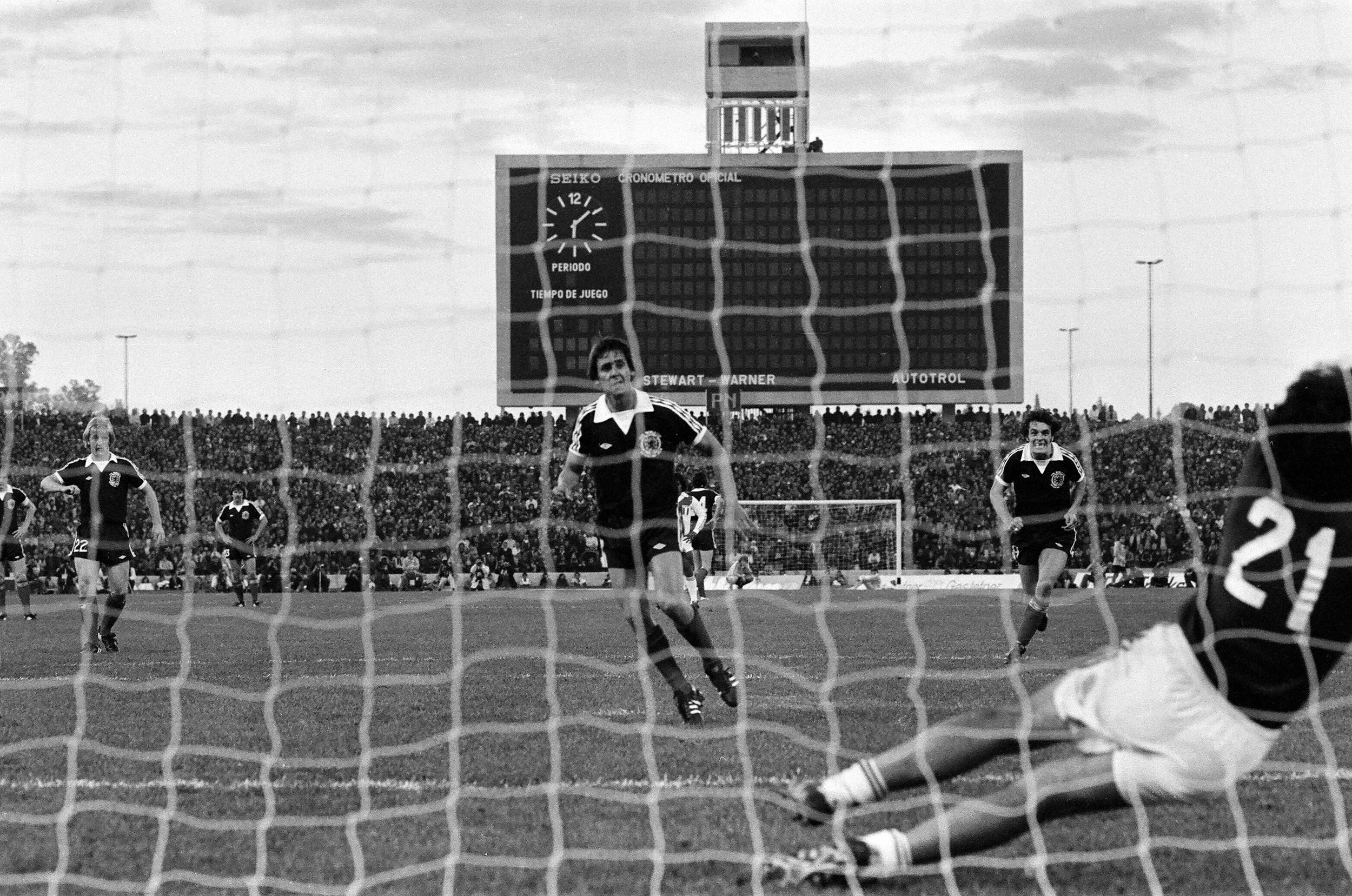
Don Masson has been there and done that. He experienced those two absolute extremes during Scotland’s World Cup campaign of 1978, the central character in a Tale of Two Spot-kicks that would serve as a textbook study for any aspiring psychologist. Terry Bowles sat down with the former Scotland captain to revisit a story shaped by adulation and notoriety in equal measure.
WORDS: TERRY BOWLESHere’s the story behind Act One…
The situation could hardly have been more tense – a winner takes all clash against Wales with a ticket to Argentina for the World Cup Finals as the prize. As an aside, the game was being played at Anfield because Wales were banned from staging it at ‘home’ following crowd trouble at their previous match.
Bruce Rioch, a forceful midfielder with the fiercest of left-foot shots, was Scotland’s captain at the time. But injury forced him to miss the game so Masson, the midfield mastermind, stepped up to replace him and ironically, he did so in more than one sense.
With 11 minutes left to play, the game was still locked up with no goals to show for all the intensity and passion you could imagine but then, Scotland were awarded a penalty.
It was an absolute travesty. In today’s world, it wouldn’t have taken more than five seconds to glance at VAR and decide the referee had got it wrong. Surely the fist that made contact with the ball – as a long throw arrived in the goalmouth – belonged to the fearsome Scottish striker Joe Jordan? But that wasn’t how the ref saw it. He insisted a Welsh defender was at fault and so Masson took a deep breath, stretched his slender frame to its full extent of 5ft 7in, and carefully positioned the ball on the spot. Picking up the story, he recalled: “Bruce always took the penalties but he’d said a few weeks earlier that he didn’t want to do that job any more. When the boss asked for volunteers, everyone looked at their shoes. Eventually, as I was the vice-captain, I thought it was my duty to step up.
“To be fair, I had taken my share of penalties over the years, especially during my time with Notts County, but I had also missed my share.”
So, given the gravity of the situation, what goes through your mind? No matter how much practice you’ve had, how much belief you have in your own ability, backed up by the experience you’ve gained from 400-plus League and Cup appearances, it takes a strong nerve and real character to face up to such a challenge.
“I’d already made up my mind where I wanted to put the ball and stuck to the plan. Davies made the wrong choice… that always helps”
“How did I feel?” added Masson. “Well, look at it this way. I was our captain on the night and I was also our designated penalty-taker. In other words, much as I might have wanted to, there was no scope for ducking out. Not that I was ever going to. No one has ever been able to accuse me of shirking my responsibilities. It was just down to me and Dai Davies, the experienced Wales goalkeeper. No one else. Simple as that.
“I did have to laugh though when I later saw a television recording of the game and the commentator said: ‘I think Don Masson is fully aware of the significance of this.’ Too bloody right I was!
“I actually felt okay. Of course, it was tense and the noise was incredible, especially after such a controversial decision. The Welsh lads were understandably aggrieved but to this day, Joe Jordan has never admitted he handled it.
“I had to stand around while all the arguments were going on and that was hardly ideal. I just wanted to get on with it. All credit to the Welsh boys though because they didn’t add to the pressures by having a go at me. I had to put blinkers on until all the fuss died down and focus on what had to be done.
“I’d already made up my mind where I wanted to put the ball and stuck to the plan. Davies made the wrong choice… that always helps.”
There was no fist-pumping and no cartwheels from the ‘Wee Man’ as the ball hit the back of the net. True to form from a man who weirdly always hated the limelight, he just shuffled back to Scotland’s half. It was almost as if he was hoping no one had noticed.
But it was such a special moment, one that precious few people get close to experiencing, and as time has gone by, he’s able to reflect at his leisure.
“It was a feeling I could never have expected to experience,” he said. “Let’s be honest, how could I seriously think that at some point in my life, however briefly, I would be the most popular Scotsman in the world? At the precise moment that I scored, I reckon that’s where I figured in the rankings.
“Over the years, people in their thousands have regularly painted a mental picture for me. In fact, I still get letters about it now from all over the world. It’s surreal. They remember very clearly where they were and what they were doing at that moment of high drama. Huddled together in the pubs and bars, factories and front rooms, most have said they were struggling to cope. They didn’t know what to do for best as I put the ball on the spot.
“It was goalless with 11-minutes to go, absolutely on a proverbial knife-edge. Even members of my own family who were at the game couldn’t bear to look. Only my dad, I was told, had total faith in me to do what was required.
“When the ball finally hit the back of the net, I could feel the love and it’s such a shame that we’re not able to stop the clock in certain situations. I wanted so much to savour that moment but unfortunately, that’s not the way life works.
“You have to move on and in our case on that unforgettable night, we still had work to do before there was genuine reason to celebrate.”
There was still time for Wales to hit back and ruin everything but with three minutes left, Kenny Dalglish put paid to those concerns with a magnificent flying header from Martin Buchan’s inviting cross.
“We were so proud of ourselves,” added Masson. “Against all the odds our little nation with a tiny population had come out on top of our qualifying group. And it meant we could make plans to embark on what we fully expected would be the adventure of a lifetime.”
Let’s take a break before moving on to Act Two of Masson’s fascinating Tale of Two Spot-Kicks and fill in some gaps which explain how the boy from Banchory worked his way into a position where he could dictate the dreams of a nation.
Born and raised on the banks of the River Dee, some 18 miles west of Aberdeen, life at that time could hardly have been contrasting with the course Donald Sanderson Masson was destined to follow.
Twelve years on, for example, the family moved to Middlesbrough when his father landed a job as a bus driver. Masson really struggled to adapt but the saving grace was that he was clearly more talented than most when it came to football.
He broke into the first-team at Middlesbrough while still a teenager and played a significant role in their run-in to promotion in 1967. However, all was not as it might have seemed. It certainly didn’t help that Stan Anderson, the new player-manager, operated in his position in the centre of midfield so a lengthy spell in the reserves was perhaps inevitable for the ambitious youngster.
But the frustrations got the better of Masson to such an extent that, as he discovered many years later, the Middlesbrough players actually handed the manager with a ‘Round Robin’ letter saying that they wanted him out of the club.
Their wish was granted but it was a strange move on Masson’s part that he landed at Notts County, who were 91st out of 92 clubs in the Football League at that time.
Fortunately though, County had a collection of very promising youngsters and under the guidance of legendary boss Jimmy Sirrel, they soon began striding up the table. They won promotion twice in the space of three seasons in the early ’70s and became a formidable force in the old Second Division.
Masson was the kingpin in that team, the undisputed leader of the pack and although he hadn’t lost the tendency to upset his colleagues because of his lack of tolerance, they could see the bigger picture. They knew that having him in their team massively influenced their wage packet every week. A significant part of their income was based on bonuses for winning or drawing, and being placed near the top of the league, and his consistently brilliant performances were a big factor in deciding what they took home at the end of each week.
Some might say he was a top-flight player wasting his talent in Division Two but what we have to remember is that back in the day, players did not have freedom of contract. They were tied to the club who held their registration for as long as they wanted them – and County were very well aware of their position of strength. So much so that Sirrel used to refer to him as “My jewel”.
So what sort of player was Masson? The closest I can think of to compare with him in more modern times would be Luka Modrić. They were blessed with the same knack of always managing to find time and space, always being available and you could normally count on the fingers of one hand how many times they gave away possession during the course of a game.
More than one top club was put off from trying to buy Masson because he did lack genuine pace. They doubted his ability to make the step up because of it but, as he finally got to prove at the age of 28, his strengths far outweighed his weaknesses.
Dave Sexton was the manager of Queen’s Park Rangers when they shelled out £100,000 for the boy from Banchory and some years on, when Masson was granted a testimonial game by Notts County, he gave a fascinating insight in the match programme into what he got for his money.
He explained that the deal had been struck on a Thursday afternoon and although it went completely against convention, he told the QPR players the following morning that they would be having a practice-match. They were shocked and less than happy but Sexton didn’t feel it would be fair on the new-boy to thrust him straight into a big game without some sort of proper introduction to his colleagues.
He hardly needed to bother, however, because as he said: “I blew the whistle after 20 minutes and told the players to go and get changed. Don had already taken control of everything from the centre of midfield, and I’d seen enough to know things would be fine.”
Equally glowing in his tribute was Frank McLintock, the former Arsenal Double-winning captain who was plying his trade at Loftus Road at that time. He wrote the Foreword in Masson’s autobiography, which included these passages: “I have to confess that I was a bit insular as a player. I’d always operated at the top level throughout my career and I’m slightly ashamed to say what happened beneath that didn’t really interest me. Consequently, when I was told we were signing Don Masson, I had genuinely never heard of him.
“I didn’t know what club he played for, what position he played and – until he told me – I certainly didn’t know he was Scottish. But like all the lads at Loftus Road, I couldn’t believe my eyes when I saw him play for the first time.
“We were stunned by his performance, and we were all asking the same questions: ‘Who is this bloke? Where on earth has he come from? And why the hell have we never heard of him before now?’
“Don had a terrific football brain – as good as I’ve ever known. If there were three or four options available when the ball came to him, he had an uncanny knack of picking the best one. You always had the impression that before the ball arrived, he’d already weighed things up and decided on his next move.
“Controlling and passing was his bread and butter. He made it look so easy and it amazed me how he was equally effective with both feet. His delivery from corners and free kicks was superb and he would swing the ball in with his left or right foot, whichever best suited the situation.
“He was very aware of his own capabilities and he hit the ground running when he joined Rangers. It was logical to assume it would take some time to step up to the First Division, but I cannot pay him a bigger compliment than to say he was already the complete player.
“I remember well the occasion on an end-of-season trip to Israel when Dave Sexton called the players together and said he had an announcement to make: ‘Don Masson has been selected in the Scotland squad for the Home International Championships.’ It meant the world to Don, especially as he was a few months short of his 30th birthday, and he was quite overcome. He had to leave the room but I went after him. I wanted to share the moment and tell him how much he deserved it.”
Masson was in his element in a star-studded QPR team operating under a manager who urged them to go out and express themselves. Here was the final piece of the jigsaw, they said, the man who made the team tick and with the likes of Stan Bowles, Gerry Francis, Don Givens and Dave Thomas to work with, they delighted audiences up and down the land.
In the end, they finished runners-up to Liverpool, who pipped them by one point, but it was the finest season in Rangers’ history. And the following year, they fought their way through to the quarter-finals of the EUFA Cup.
Act Two…
Don Masson earned 17 caps for Scotland between 1976 and 1978 and scored five goals. Incredibly, considering his size, one of those was a header against England at Hampden Park and what a thrill that gave him.
Call it coincidence if you like but there’s a strong case for arguing that the three-year period when he was a major influence was right up there as one of the greatest spells in Scotland’s football history. After all, they won back-to-back Home International Championships – a feat achieved on only one other occasion – and qualified for the World Cup Finals as undefeated group winners.
“The facilities within the complex were horrendous. They really were. There was even a swimming pool with no water and absolutely nothing that was going to keep us occupied during our down-time over the next three weeks or so. We were banned from leaving the camp and armed guards were permanently on duty to make sure we didn’t.”
The stage was set for a very special adventure when they went to Argentina and there was certainly no shortage of talent in the squad. For example, the established midfield trio was Asa Hartford, Masson and Bruce Rioch and their understudies were Lou Macari, Graeme Souness and Archie Gemmill.
Ally MacLeod was spoilt for choice in most positions but whether that was enough to justify all the pre-tournament hype that he generated was open to debate. The extrovert boss mounted a grand tour of Scotland, telling everyone prepared to listen that they would win the Cup and inevitably, expectation levels went through the roof.
Masson takes up the story: “It was bound to be a big deal because we were the only UK country to qualify for the Finals but things needed to be handled in a sensible way. The players thought it was way over the top. We had good players and on our day we were a formidable team. But there was no way on earth that we could produce performances and results that would meet with the sky-high expectations.
“We weren’t in the best frame of mind after some lack-lustre displays in the end-of-season Home Internationals and what we needed from Ally was some controlled leadership. This was his time.
“I liked him and he was always very fair with me. He was a born optimist, always a very bubbly character. There’s nothing wrong with being positive but it was going to take a lot more than that to prepare us properly for what we were about to face.”
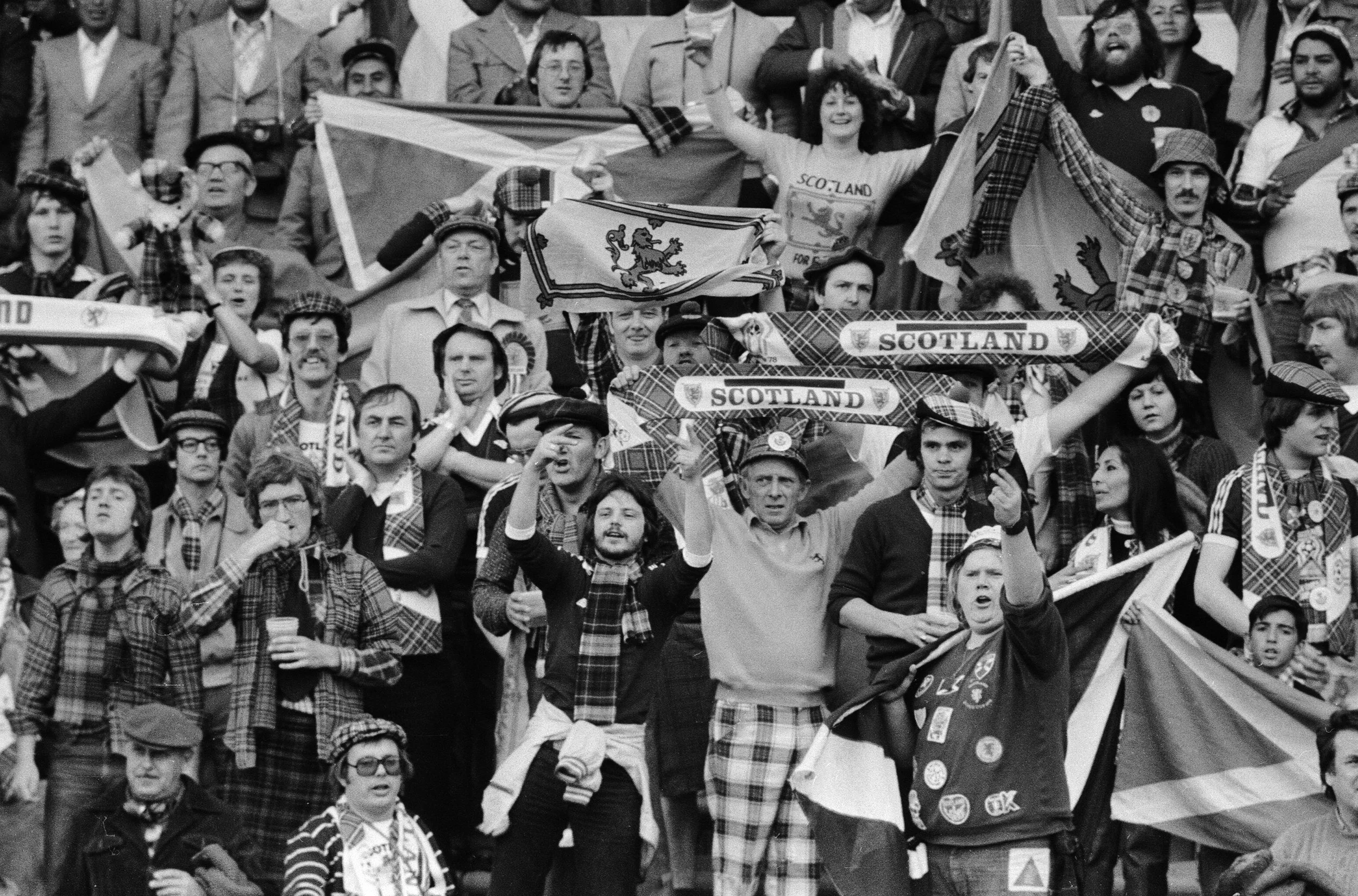
Ecstatic fans packed Hampden Park to see the squad off to Argentina and thousands more lined the streets as the open-top bus made its way to Prestwick Airport. But what an anti-climax there was when they arrived at their base camp in Alta Gracia, not far from Cordoba.
Added Masson: “The facilities within the complex were horrendous. They really were. There was even a swimming pool with no water and absolutely nothing that was going to keep us occupied during our down-time over the next three weeks or so. We were banned from leaving the camp and armed guards were permanently on duty to make sure we didn’t.
“Every step of the way there seemed to be a nasty taste. For example, our training facility was just a wide-open field, located a short bus ride away. The whole thing was a shambles.”
Fast-forward to the opening match against Peru and with an hour gone, Masson was back on the spot. It was 1-1 at that stage and although Joe ‘Jaws’ Jordan had just fluffed a couple of clear chances, Scotland would be back in control if the penalty was converted.
As history records, this time the golden opportunity from 12 yards went to waste. Scotland went on to lose 3-1 and from that day to this, he holds himself personally responsible for that result.
“I quickly made up my mind when the penalty was awarded that I’d repeat what I did against Wales,” he recalled.”It had worked perfectly that night so why shouldn’t it do so again? I checked my run-up as usual and hit it to the goalkeeper’s right. But by the time the ball reached him, he was already in position, waiting for the ball to arrive. They’d clearly done their homework.”
Without doubt, it was a life-changing moment for Masson. As any top sports star will tell you, the euphoria that stems from real success is never as intense or long-lasting as the pain that’s associated with failure – and that incident has haunted him ever since. The memory of his goal against Wales burns nothing like as brightly.
He said: “I can tell you with absolute sincerity that there isn’t a day that goes by when I don’t hark back to that dreadful experience. I guess it’s a piece of heavy baggage I’m destined to carry with me until I go to my grave.
“I cannot help myself. Whenever I meet a Scots person for the first time, I invariably start the conversation by apologising. In fact, I even made ‘Still Saying Sorry’ the title of my autobiography.”
Masson was left out for the next match, as was Rioch, and what was expected to be a formality against Iran ended 1-1. A thrilling 3-2 win over Holland followed that but the damage had already been done.
Rock Bottom…
Don Masson’s day from hell in Argentina didn’t end with his missed penalty and a 3-1 defeat that seriously harmed their World Cup hopes.
There was still more ‘action’ to come because he just happened to be sharing a room at their base camp with Willie Johnston, who was sent home after failing a drugs test.
Don recalled: “As soon as we arrived back at the complex, ‘Bud’ (as Johnston is known) and I headed straight to our room. We were lying on our beds, trying to console each other, when there was a tap on the door. It was Ally MacLeod and I’ll never forget the grim expression he had on his face. He told ‘Bud’ that he needed to go with him to the team doctor’s room. He never came back.
“The next thing I recall was being told I had to take a member of the Scottish FA committee to my room. I was totally confused. I showed him which was ‘Bud’s’ stuff and which was mine and he started to pack his gear into a case. I was getting really irritated and demanded to know what was happening. He told me that ‘Bud’ had tested positive and was being sent home immediately.
“He was shown absolutely no mercy. He could hardly have been treated worse if he’d been a murder suspect. He was bundled into a car with a blanket over his head and driven some 400 miles to Buenos Aires. After spending the night in the British Embassy, he was put on a plane home.”
The Exit…
Don Masson returned to familiar surroundings when he found himself in serious need of rehab after his World Cup shock. At the age of 32, he returned to Notts County from Derby County and fulfilled an ambition… to captain the oldest League club in the world from the Fourth Division right through to the First. The final part was achieved in 1981, when County returned to the top-flight for the first time in 52 years.
Heading up towards his 80th birthday, Masson now lives in a village some eight miles east of Nottingham, which he describes as “my own slice of Banchory”.
He explained: “I always thought I’d find my way back to Banchory at some stage. That didn’t happen but I’ve got the next best thing, looking out over miles of open fields.”